
Maximowicz's lespedeza
Lespedeza maximowiczii C. K. Schneid.
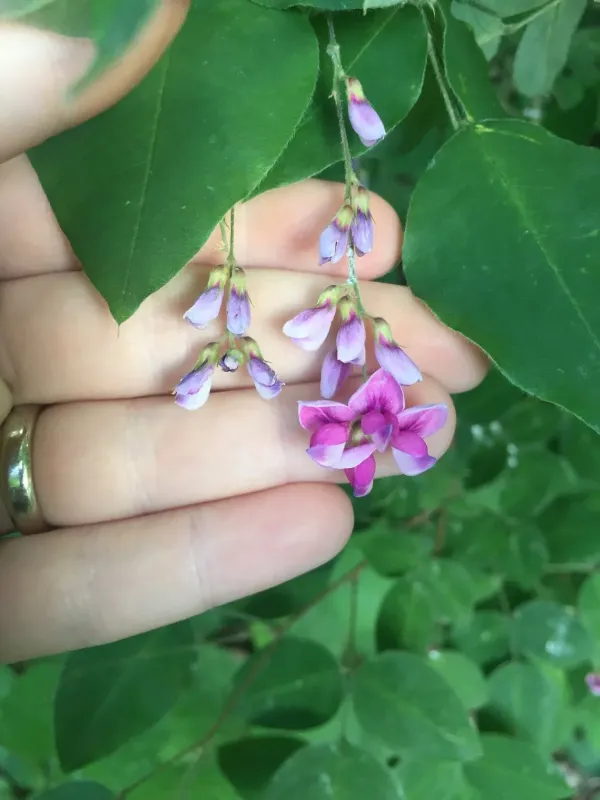
Description
Sowing dates
Sowing of Maximowicz's lespedeza seeds is typically performed in the spring, once soil temperatures reach 10–12°C. The seeds possess a hard coat and require scarification to ensure optimal germination rates.
Seeds should be planted at a depth of 1–2 centimeters. Maintaining adequate soil moisture during the germination phase is critical for achieving a uniform stand of seedlings.
A row spacing of 45–60 centimeters is recommended to allow the plant sufficient space to develop its extensive root system and canopy. The plants show slow growth during the first year of establishment.
The seeding rate is approximately 8–10 kg per hectare. Proper site selection, prioritizing sunny locations protected from strong winds, significantly improves initial seedling survival.
Natural reseeding is a common feature of this species, which can help increase plant density over several years without the need for additional sowing.
Growing requirements
Maximowicz's lespedeza is a perennial deciduous shrub belonging to the Fabaceae family. It is recognized for its impressive hardiness and adaptability to various environmental conditions.
The crop thrives in light, well-drained soils, including sandy or rocky terrains. It performs well on nutrient-poor sites, contributing to soil improvement via symbiotic nitrogen fixation.
This species is highly photophilous and requires full sun exposure to reach its maximum productive potential. Shaded conditions lead to reduced flowering and overall plant vigor.
Due to its deep taproot, the shrub exhibits excellent drought tolerance. It is well-suited for regions with irregular rainfall patterns where other crops might struggle.
The plant demonstrates significant winter hardiness. While extreme cold may cause minor frost damage to tips, the shrub typically recovers rapidly due to its ability to sprout from dormant buds.
Yield
The crop is highly valued as an exceptional honey plant. It blooms in late summer, providing a vital nectar source for pollinators when other flora options are limited.
The green foliage is rich in protein, making it a viable component for livestock forage programs. Harvesting the biomass requires careful management to balance forage yield with plant sustainability.
In terms of land management, lespedeza is extensively used for soil conservation. Its robust roots effectively stabilize slopes and prevent erosion in degraded agricultural landscapes.
Ornamental use is common in landscape design due to the plant's aesthetic appeal, particularly during its late-season blooming period when flowers provide a vibrant contrast.
Seed production is an important secondary objective. Proper harvest timing is necessary as seeds ripen gradually, and premature harvest can result in significant yield losses.
Main diseases and pests
The species shows strong natural resistance to most common crop diseases. However, prolonged waterlogging can increase the risk of root rot pathogens in heavy soils.
Pest outbreaks are generally sporadic and rarely cause economic damage. Occasional leaf-feeding insects are common but usually do not warrant chemical intervention.
Weed competition is the most significant threat to young lespedeza plantations. Effective early-stage weed control is essential for ensuring successful establishment.
Rodent damage to bark may occur during winter months in younger stands. Protective measures are advised in areas where small mammal populations are high.
Over-fertilization with nitrogen can lead to excessive, succulent growth, which reduces the plant's winter hardiness and increases the likelihood of winter-kill.