
Kummerowia stipulacea
Lespedeza stipulacea Maxim.
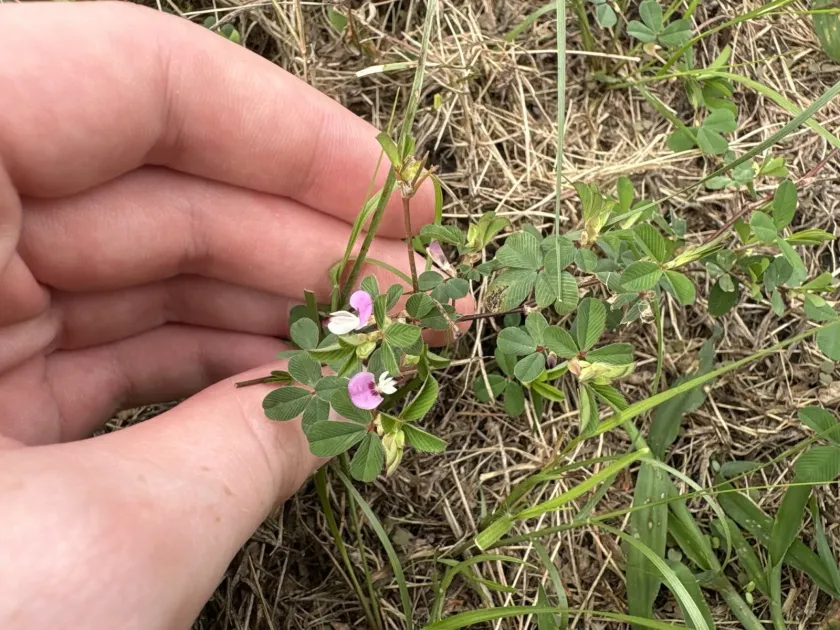
Description
Sowing dates
Kummerowia stipulacea (syn. Lespedeza stipulacea Maxim.), commonly known as Korean clover, is a valuable annual legume belonging to the Fabaceae family. Originating from East Asia, this plant is widely appreciated in agriculture for its ability to thrive in low-fertility soils and provide quality forage.
Sowing should take place in the spring once the soil temperature consistently reaches 10–12 degrees Celsius. Because the seeds possess a hard seed coat, scarification is highly recommended to improve germination rates and ensure a uniform plant stand in the field.
Seeds should be planted at a shallow depth of 1–2 centimeters. While the crop grows slowly during the initial vegetative stage, increasing the seeding rate can help establish a denser canopy, which naturally suppresses weed growth and reduces the need for herbicides.
The plant is highly compatible with other forage grasses. In many agricultural systems, it is used as a cover crop or an interseeded species in winter cereal fields, effectively utilizing the post-harvest period to accumulate biomass and fix atmospheric nitrogen.
Effective establishment depends on selecting weed-free fields and ensuring adequate soil contact. Once established, the root system begins to develop rapidly, allowing the plant to better withstand environmental stressors later in the season.
Growing requirements
Kummerowia stipulacea requires full sun exposure to achieve optimal growth. It is exceptionally drought-tolerant once established, making it an excellent choice for regions with limited rainfall or areas where more sensitive legumes like alfalfa struggle to persist.
The crop is highly adaptable to various soil types, including acidic and poor-quality soils. However, it performs best on well-drained sandy loam or loam soils that allow for good root penetration and moisture retention during the warmer summer months.
Temperature is a critical factor for development. Being a warm-season legume, it thrives when temperatures range from 20 to 25 degrees Celsius and is very sensitive to both late spring and early autumn frosts, which can terminate the vegetative cycle.
While it has moderate moisture requirements, its deep taproot system allows it to reach subsoil moisture, contributing to its reputation as a resilient crop in arid or semi-arid climates. Proper drainage is essential, as waterlogging can cause root damage.
Fertilization with phosphorus and potassium is beneficial to stimulate nitrogen-fixing nodule activity. Nitrogen fertilizer is rarely needed because the plant forms a symbiotic relationship with specific bacteria that fix nitrogen from the air, naturally enriching the soil.
Yield
The yield of green biomass ranges between 15 and 25 tons per hectare, depending on local conditions, soil fertility, and management practices. It is usually harvested in a single cut, though the regrowth can provide useful pasture for livestock during the autumn.
Seed production is an important aspect of the crop cycle. Under optimal conditions, farmers can expect a yield of 0.5 to 1.2 tons of seed per hectare, which is usually sufficient to maintain or expand the planting area in subsequent years.
The forage value is high due to the significant protein content and digestibility, making it a comparable alternative to other clovers. It is processed into hay, silage, or haylage, all of which are highly palatable for cattle, sheep, and goats.
As a soil-improving crop, it plays a vital role in sustainable agriculture. By fixing nitrogen and adding organic matter to the soil, it significantly boosts the fertility of depleted lands and helps prevent erosion on sloping terrains.
The crop's ability to produce biomass late in the season provides a critical safety net for livestock producers, ensuring that there is high-quality green forage available when other cool-season pasture grasses begin to decline in quality.
Main diseases and pests
Kummerowia stipulacea is generally resistant to many common legume diseases. However, high humidity and poor field drainage can occasionally lead to fungal infections such as root rot or powdery mildew, which can reduce overall plant vigor.
Pests such as the clover leaf weevil and various species of aphids may cause damage to young shoots or leaves. In hot, dry weather, spider mites can become an issue, necessitating careful monitoring of the field during the peak of summer.
Integrated pest management, including crop rotation and proper field hygiene, is the most effective way to prevent outbreaks. Chemical control should only be used as a last resort, following established economic injury thresholds.
Weed competition remains the primary challenge during the first 4 to 6 weeks of life. Timely cultivation between rows and the use of selective herbicides can help manage weeds effectively, allowing the crop to dominate the space as it matures.
Preventative measures, such as avoiding over-seeding and ensuring good air circulation within the canopy, go a long way in reducing the risk of disease and promoting a healthy, productive stand throughout the growing season.
Harvesting
The best time to harvest for high-quality forage is at the onset of flowering. Harvesting at this stage ensures the best balance between biomass quantity and nutritional density, preventing the stems from becoming too lignified and indigestible.
For seed production, the harvest should occur when the majority of the pods turn brown. It is crucial to monitor the maturity closely, as pods can shatter and lose seeds if left in the field for too long after reaching full maturity.
When making hay, cutting should be done with equipment that preserves leaves, as the leaves contain the majority of the plant's nutritional value. Quick drying in thin layers is recommended to maintain the green color and protein content.
A two-stage harvesting process is recommended for seeds: mowing into swaths first, followed by combining after the material has dried properly. This method reduces mechanical damage to the seeds and ensures high viability for future planting.
After the harvest, incorporating the stubble into the soil through light disking is an excellent way to cycle the accumulated nitrogen back into the topsoil, preparing the land for the next crop in the rotation.