
Epilobium canum
Epilobium canum (Greene) P. H. Raven
Description
Growing requirements
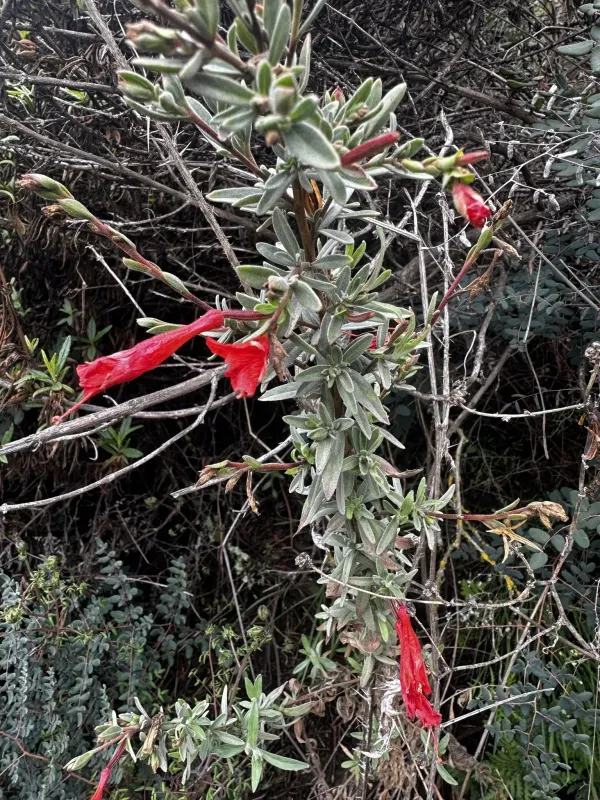
Epilobium canum, formerly known as Zauschneria, is a distinguished perennial plant belonging to the Onagraceae family. Known for its brilliant, tubular, scarlet-orange flowers, it is a staple in xeriscape and decorative landscapes.
The plant originates from the dry and rocky slopes of Western North America, specifically California. This natural background has equipped the species with high drought tolerance and a preference for well-drained, gritty environments.
Ideal cultivation conditions require full sun exposure, which ensures the plant maintains its compact growth habit and produces abundant blossoms throughout late summer and autumn.
Soil requirements are centered on excellent drainage. While the species is not particularly demanding regarding fertility, it suffers significantly in clay-heavy or waterlogged soils, which promote root rot.
Management of the plant involves minimal irrigation once established. Deep, infrequent watering is preferable to light, frequent surface moisture, as the latter can encourage shallow roots that are susceptible to summer heat stress.
Main diseases and pests
The primary threat to Epilobium canum is the development of root and crown rots. These diseases are almost exclusively triggered by excessive moisture and poor soil aeration, which are detrimental to the plant's health.
Aphids can be a recurring nuisance during the spring growth phase. They typically cluster around the tender tips of new stems, potentially distorting the foliage and attracting secondary fungal issues through honeydew secretion.
Powdery mildew represents a significant fungal threat in environments with stagnant, humid air. Proper spacing between individual plants is essential to facilitate air circulation and minimize the risk of infection.
Spider mites may infest the plant during prolonged periods of high heat and low humidity. Monitoring for yellow speckling on the leaves is critical for early detection and mitigation of these pests.
To maintain a healthy garden display, it is advisable to clear away dead plant debris around the base each spring. This practice reduces the environment for pathogens and ensures new growth has sufficient space and sunlight.