
Bermuda grass
Cynodon dactylon (L.) Pers.
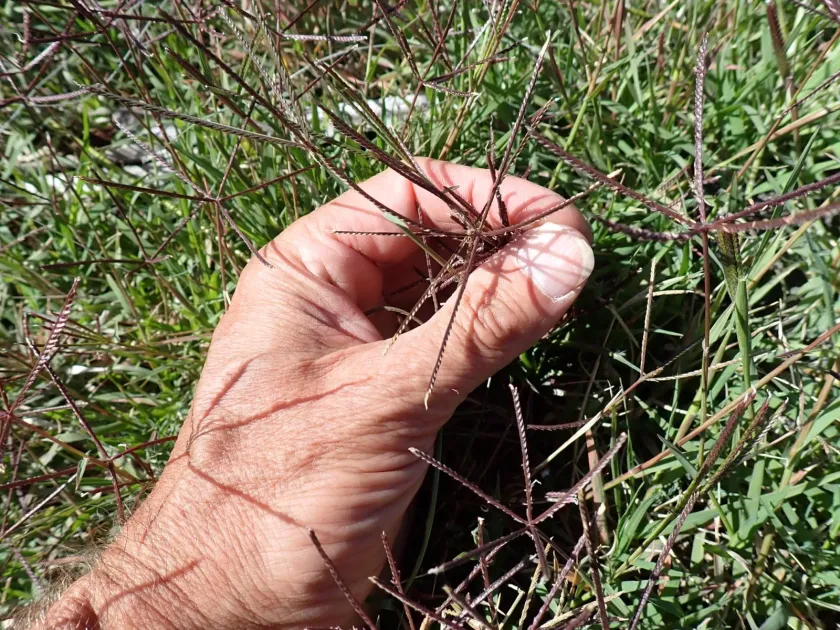
Description
Sowing dates
Bermuda grass is a warm-season perennial that requires stable soil temperatures above 18°C for optimal germination and establishment.
Planting is commonly achieved through seeding or vegetative propagation, such as using sprigs or plugs, which are highly effective for rapid coverage.
When seeding, it is essential to distribute the seeds evenly on a prepared seedbed, covering them with a thin layer of soil to protect them from birds and drying out.
Vegetative establishment involves planting stolons or rhizome fragments in furrows, which is often preferred for creating uniform sports fields or erosion control areas.
The best time for planting is late spring or early summer, ensuring the plants have sufficient time to establish a robust root system before the onset of autumn cooling.
Growing requirements
Belonging to the Poaceae family, Bermuda grass is renowned for its exceptional drought tolerance and ability to thrive in poor, saline soils.
It is a sun-loving plant that requires full exposure to direct sunlight; it performs poorly and becomes thin under shade conditions.
The grass grows well on a wide range of soil types, from sands to clay loams, provided they have adequate drainage to prevent long-term waterlogging.
Its deep root system allows it to persist during dry spells, making it an ideal choice for arid and semi-arid climates where water availability is limited.
Agronomic management requires consistent nitrogen application during the growing season and regular mowing to promote horizontal growth and density.
Yield
Bermuda grass is a versatile crop, highly valued for its ability to withstand heavy grazing pressure while maintaining productivity.
Under favorable environmental conditions and regular irrigation, it can produce significant biomass yields suitable for both grazing and hay production.
The nutritional content of the forage is highest when the plant is actively growing; it provides a good source of fiber and protein for livestock.
Multi-cut systems are common in managed fields, where regular harvesting allows for fresh, high-quality regrowth throughout the warm season.
Productivity remains relatively stable across different harvest cycles, provided the grass is not overgrazed and receives proper nutrient replenishment.
Main diseases and pests
While naturally resilient, Bermuda grass can be susceptible to fungal diseases such as leaf spot or rust, especially in humid or poorly ventilated areas.
Common pests include mole crickets, armyworms, and wireworms, which can cause significant damage to the root system and foliage if left uncontrolled.
Good management practices, such as proper irrigation scheduling and avoiding excessive moisture, are key to preventing the spread of fungal pathogens.
Pest management often relies on integrated control measures, including biological control and targeted use of insecticides when thresholds are exceeded.
In many agricultural regions, Bermuda grass itself is treated as a persistent weed in other crops, requiring deep tillage and herbicide control for removal.
Harvesting
Harvesting for hay should ideally occur at the peak of the nutritional cycle, typically during the mid-to-late vegetative stage before seed heads fully mature.
Efficient drying methods are necessary to preserve the quality of the forage, as prolonged exposure to moisture in windrows can lead to rapid nutrient loss.
Modern harvesting equipment, including disc mowers and balers, is used to ensure clean cuts and proper collection of the biomass for long-term storage.
Post-harvest management involves leaving sufficient stubble to protect the growing points, which facilitates faster regrowth for the next cycle.
Careful planning of the harvesting calendar helps maximize the yearly yield and maintains the overall vigor of the stand for subsequent seasons.