
Bermuda grass
Cynodon dactylon (L.) Pers. var. dactylon
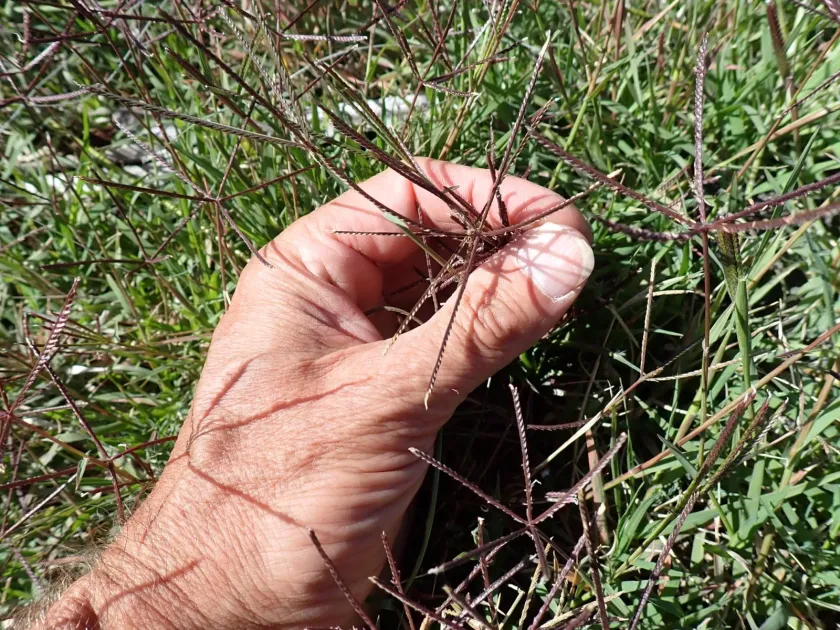
Description
Sowing dates
Bermuda grass is a perennial, rhizomatous, and stoloniferous grass widely cultivated for forage and erosion control. Sowing is typically performed in late spring when soil temperatures reach 18–20 degrees Celsius for optimal germination.
For establishing new pastures, seeds should be sown in a well-prepared, fine-textured seedbed. The seeds are very small and must not be buried deeper than 1–1.5 centimeters to ensure successful emergence.
Vegetative propagation using stolon cuttings is a common and highly effective method for rapid establishment. This technique is preferred for areas prone to erosion where a quick cover is essential.
Maintaining consistent soil moisture during the first few weeks after sowing is critical for seedling establishment. Once the grass is established, it becomes highly resilient to environmental stress.
Care must be taken to select improved, high-yielding varieties depending on the intended use. Proper initial fertilization is necessary to support the rapid development of the root and stolon network.
Growing requirements
Bermuda grass thrives in full sunlight and does not tolerate shade, which limits its growth in forested areas. It is widely adaptable to various soil types, ranging from sandy soils to heavy clays.
This species is well-known for its exceptional drought tolerance, allowing it to remain productive in arid climates. It can survive extended dry spells by entering a semi-dormant state.
It performs best in warm climates and experiences significant growth during the hot summer months. While it is sensitive to severe frost, the underground rhizomes usually survive the winter to sprout again in spring.
Soil pH should ideally be between 5.5 and 7.5 for optimal nutrient uptake. The crop is also tolerant of moderate salinity, making it a valuable choice for challenging landscapes.
Regular fertilization, particularly with nitrogen, is required to maintain high forage yields. Consistent soil analysis helps in adjusting fertilizer applications to meet the crop's nutritional needs.
Yield
The primary use of Bermuda grass is as a high-quality pasture for livestock, including cattle and sheep. Its nutritional value is excellent when managed to maintain a vegetative growth stage.
Forage yield is significantly boosted by proper irrigation and nitrogen management. Under intensive management, it can support high stocking rates per hectare throughout the growing season.
Beyond forage, it is widely used as a turf grass for sports fields and lawns due to its ability to withstand heavy traffic and recover quickly from mechanical damage.
It is an outstanding plant for soil conservation, as its aggressive root system forms a dense, binding layer that protects slopes and embankments from erosion.
Despite its benefits, farmers should be aware that it can become a persistent weed in crop fields. Effective management and containment are essential to prevent unwanted spreading.
Main diseases and pests
Bermuda grass is susceptible to several pests, including grass loopers and armyworms, which can cause significant defoliation. Early detection is key to preventing large-scale damage to the pasture.
Fungal diseases like leaf spot and rust are common in humid conditions or poorly drained soils. These diseases reduce the palatability and overall biomass quality of the forage.
Management of diseases is largely focused on cultural practices, such as maintaining appropriate grazing intervals and preventing waterlogging. Excessive moisture is a primary stress factor for the plant.
Nematodes can sometimes impact the root system in sandy soils, leading to stunted growth. Monitoring root health is important for maintaining vigor in established stands.
Integrated pest management, emphasizing resistant varieties and sound field sanitation, remains the most effective way to protect the crop against biotic stresses.
Harvesting
For hay production, the crop should be harvested during the early heading stage to capture the best balance of protein and digestibility. Avoiding late harvest is crucial for quality.
When used as pasture, a rotational grazing system is highly recommended. This ensures that the grass has time to recover between grazing periods, enhancing long-term productivity.
Drying Bermuda grass hay requires efficient mechanical handling, such as tedding, to remove moisture effectively before baling. Proper storage is necessary to prevent spoilage.
Mowing height should be maintained at roughly 5–7 centimeters to allow the plant to regenerate rapidly from its stolons. Lower cutting may weaken the plant stand.
Seed harvesting requires specific machinery because of the uneven maturation of the seed heads. Harvesting should be timed carefully to minimize shattering losses in the field.