
Camelina
Camelina sativa (L.) Crantz
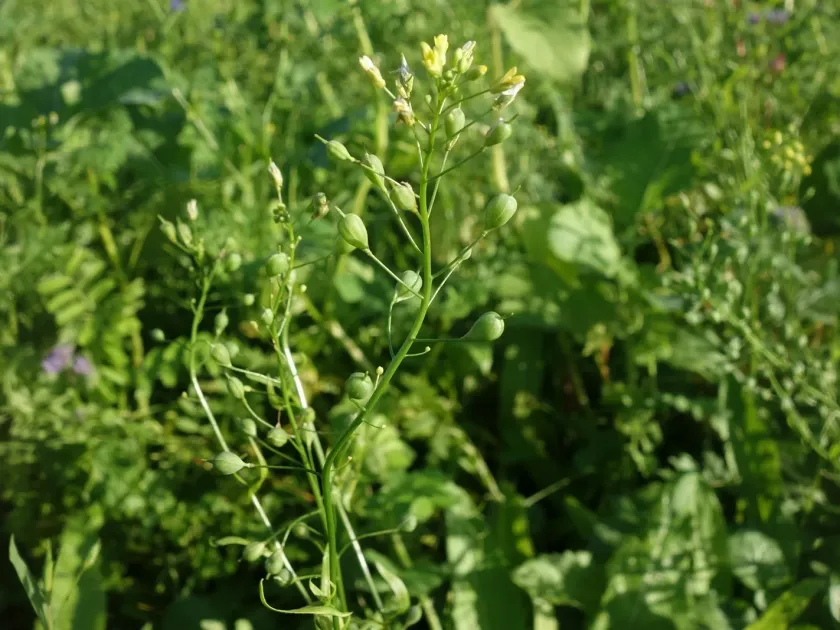
Description
Sowing dates
Camelina sativa is a cold-hardy crop, allowing for early spring planting as soon as the soil is dry enough to handle mechanical operations.
Early sowing is beneficial as it allows the crop to establish a robust root system before the onset of potential summer drought conditions.
The recommended seeding rate is typically between 8 to 12 kilograms per hectare, depending on the chosen planting method and local environmental factors.
Drill seeding is generally preferred, with a planting depth of approximately 1 to 2 centimeters to ensure optimal seed-to-soil contact and emergence.
Proper calibration of the seeding equipment is essential to achieve a uniform plant population across the field, which is critical for weed suppression.
Growing requirements
Camelina belongs to the Brassicaceae family and is known for its remarkable adaptability to various soil types, including light sandy and clay soils.
It prefers well-drained, fertile soils with a neutral pH, although it demonstrates a high level of tolerance to moderate soil acidity and drought.
The crop is highly valued for its short growth cycle, often maturing in 80 to 100 days, which makes it ideal for short-season agricultural regions.
Camelina requires minimal input compared to other oilseeds, which reduces production costs and enhances its sustainability profile in modern crop rotations.
It thrives in temperate climates and is highly efficient at utilizing available soil moisture, making it a reliable option for low-input farming systems.
Yield
Under favorable management conditions, Camelina can produce seed yields ranging from 1.0 to 1.5 tonnes per hectare in commercial production fields.
Yield stability is one of the key strengths of Camelina, as it maintains performance even under stress conditions where other crops might fail.
The oil content of the seeds is significant, generally ranging from 30 to 45 percent, which determines the market value of the harvested raw material.
The resulting oil is highly sought after for the production of biodiesel and as a high-quality nutritional supplement due to its fatty acid composition.
Technological improvements in harvesting and processing are continuously enhancing the economic viability of Camelina for farmers worldwide.
Main diseases and pests
Crucifer flea beetles are the most significant pest for Camelina, particularly during the seedling stage when they can cause severe defoliation.
Diseases such as downy mildew and various bacterial infections can impact crop health, especially in areas characterized by high humidity and poor drainage.
Integrated Pest Management (IPM) practices are highly recommended to minimize the reliance on chemical insecticides and maintain ecological balance.
Maintaining a clean field and selecting disease-resistant varieties are essential strategies for mitigating the impact of typical cruciferous diseases.
Regular scouting of fields during the early vegetative stages allows for the timely application of control measures if pest thresholds are reached.
Harvesting
Harvesting Camelina should be conducted promptly when the plants turn yellow-brown and seed moisture drops below 12 percent to minimize losses.
If harvesting is delayed, the risk of seed shattering increases significantly, which can lead to substantial reductions in total yield per hectare.
Standard grain combines can be used for harvesting, provided that the settings for fan speed and sieve openings are adjusted for small seeds.
Post-harvest management involves careful drying and cleaning to remove impurities, ensuring that the moisture content is stable for long-term storage.
Properly dried and stored Camelina seeds are durable and can be kept in standard storage facilities without losing their oil quality over several months.