
Dahurian angelica
Angelica dahurica (Fisch.) Benth. & Hook. f. ex Franch. & Sav.
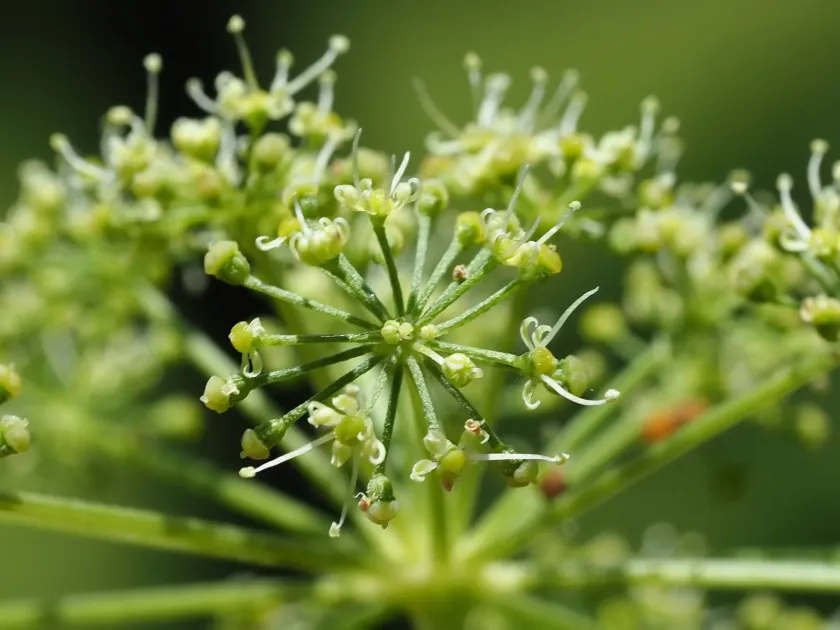
Description
Sowing dates
Dahurian angelica is a biennial herbaceous plant belonging to the Apiaceae family. In agricultural practice, it is typically sown either in late autumn or in early spring, depending on regional climatic conditions.
The optimal time for spring planting is late April. It is essential to ensure consistent soil moisture to facilitate germination, as the seeds require a period of cold stratification or moist conditions to break dormancy.
Seeds should be sown at a depth of 1–2 centimeters. Row spacing is typically maintained at 45–60 centimeters to provide adequate room for plant growth and to improve air circulation, which prevents fungal outbreaks.
Autumn sowing allows seeds to undergo natural stratification over winter, leading to more uniform and vigorous seedling emergence when the soil warms up in the spring.
Care must be taken to avoid overcrowding. Thinning the seedlings ensures that each plant has enough space to develop a large, healthy taproot, which is the primary marketable part of this crop.
Growing requirements
Dahurian angelica thrives in fertile, loamy, or sandy-loam soils that are well-drained. The plant is highly sensitive to waterlogging, so soil with deep, permeable horizons is preferred for successful cultivation.
The crop requires full sun exposure to maximize the accumulation of active compounds, such as furanocoumarins, within the root system. Shady conditions typically result in reduced plant vigor and lower chemical quality.
A slightly acidic to neutral soil pH is ideal. Pre-planting soil preparation should include the incorporation of organic matter, like well-rotted compost, to enhance soil structure and nutrient availability.
Consistent moisture is necessary during the first year of growth when the plant is establishing its root structure. However, water management should be balanced to prevent the onset of root rot diseases.
The plant is relatively hardy, but in regions with harsh, snowless winters, young plants may benefit from light mulching to protect the crown from frost damage.
Yield
The economic value of Dahurian angelica lies in its roots, which are used in traditional medicine. Yield potential depends heavily on soil fertility, moisture availability, and the timing of the harvest.
Root development peaks at the end of the second year of growth. It is critical to harvest before the plant enters the flowering phase, as energy is diverted to the seeds, making the roots woody and less potent.
Under optimal management, growers can expect an average yield of 1.5 to 3 metric tons of dried roots per hectare. Precision in harvesting and processing is key to maximizing these returns.
Prevention of premature bolting during the first year is essential. If a plant flowers prematurely, the root loses its market value due to changes in its chemical composition and texture.
Selection of high-quality, certified seeds is a recommended practice to ensure uniformity across the field, which simplifies harvest operations and improves overall product consistency.
Main diseases and pests
Powdery mildew is a common fungal threat to Dahurian angelica, particularly during periods of high humidity and fluctuating temperatures, appearing as a white film on the leaves.
Root rot represents the most significant threat to plant health, often caused by poorly drained soils or excessive irrigation. It can rapidly deplete a plantation if not managed through proper soil hygiene.
Aphids and various caterpillar species are the primary insect pests that affect the foliage. Regular monitoring is necessary to prevent significant defoliation during the growing season.
Crop rotation is a fundamental management strategy. Planting Dahurian angelica in the same field should be avoided for at least 4–5 years to disrupt the lifecycle of soil-borne pathogens.
- Maintain good weed control to reduce habitats for pests.
- Improve soil aeration through regular shallow cultivation between rows.
- Utilize integrated pest management practices, prioritizing biological controls.
Harvesting
Harvesting is conducted in the autumn of the second year when the aerial parts of the plant begin to wither, signaling that the plant has stored maximum nutrients in the root.
Mechanized lifting is commonly used, employing specialized plows that lift the roots with minimal damage. Gentle handling is vital, as cuts and bruises can lead to rapid post-harvest degradation.
Once harvested, roots are washed thoroughly in cold running water to remove soil particles. Any lateral roots or damaged sections are trimmed to ensure the final product meets quality standards.
Drying must be performed at controlled temperatures (40–50 degrees Celsius). Excessive heat causes the loss of volatile essential oils, which are crucial for the medicinal properties of the plant.
Stored roots should be kept in a cool, dry, and well-ventilated area. Protection from pests and moisture is mandatory to ensure the longevity and shelf-life of the dried raw material.