
Giant Angelica
Angelica gigas Nakai
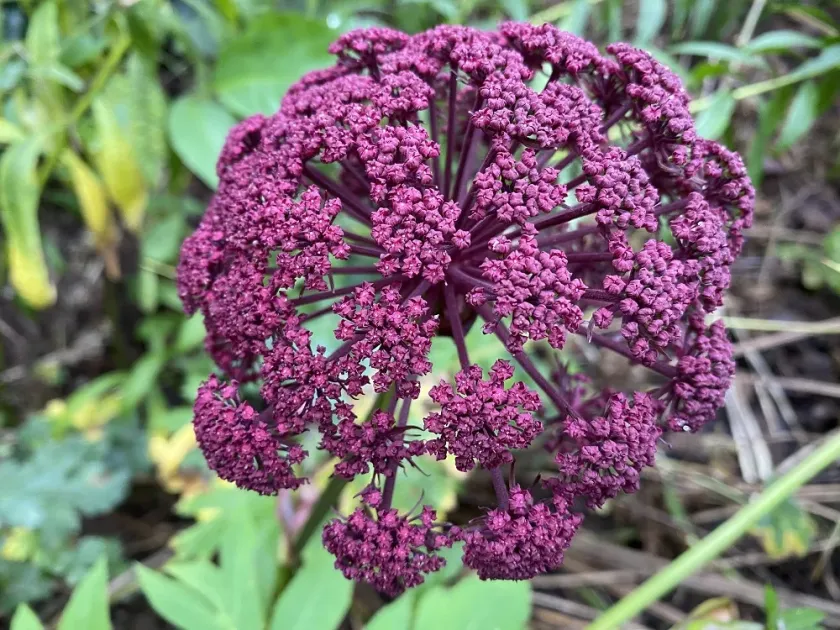
Description
Sowing dates
The seeds of Angelica gigas Nakai exhibit significant dormancy and require a period of cold stratification, typically 30 to 60 days at temperatures between +1 and +5 °C, to germinate successfully.
For best results, seeds should be sown outdoors in late autumn, allowing the natural winter cycle to break seed dormancy and ensure uniform germination in the following spring.
When starting indoors, seeds should be sown in moist peat-based compost and placed in a refrigerator or cold room for the necessary stratification period before being moved to a warmer area.
Once moved to a warm environment, germination usually occurs within two to three weeks, provided the temperature is maintained between +18 and +20 °C.
Seedlings should be hardened off gradually before being transplanted into their final growing location, ensuring they are spaced approximately 50 to 60 cm apart to prevent competition.
Growing requirements
Angelica gigas thrives in fertile, moisture-retentive, and well-drained loamy soils, preferring sites that provide consistent moisture throughout the growing season.
While the plant is often classified as a sun-loving species, it performs exceptionally well in partial shade, especially in warmer climates where protection from the midday sun is beneficial.
Soil pH should ideally be neutral or slightly acidic; incorporating organic matter such as well-rotted manure or compost prior to planting is highly recommended for optimal development.
The plant originates from the mountainous regions of Korea, China, and Japan, making it quite hardy and capable of tolerating cool temperate conditions during the growing season.
Adequate space is essential, as the plant can reach considerable heights, often exceeding one meter, requiring stable soil conditions to support the tall flower stalks.
Main diseases and pests
The most significant threat to Giant Angelica is waterlogged soil, which leads to root rot and crown decay, often caused by poor drainage or excessive irrigation during cool periods.
Fungal diseases, including powdery mildew and various types of leaf spot, may appear if air circulation is poor, particularly during hot and humid summer conditions.
Aphids and spider mites are common pests that feed on the sap of young foliage and developing flower buds, which can stunt plant growth and attract secondary infections.
In certain environments, slugs and snails may pose a risk to young seedlings, requiring vigilant monitoring and protective measures during the early stages of plant development.
Maintaining proper plant density and implementing a rigorous crop rotation program are the best defenses against building up soil-borne pathogens and pests.
Harvesting
The harvest of Angelica gigas is primarily directed toward the roots, which are highly valued for their concentration of decursin and other medicinal coumarins.
Roots should be harvested in the autumn of the second year of growth, just as the plant begins to enter dormancy and before the onset of hard frosts.
After excavation, the roots must be thoroughly washed to remove soil, trimmed of fine rootlets, and processed immediately to prevent spoilage or oxidation.
Drying should be conducted at low temperatures (below +45 °C) to ensure the volatile oils and active pharmaceutical ingredients remain stable for subsequent use.
If harvesting seeds for propagation, the heads should be collected once they have turned deep brown, and handled carefully to prevent the dispersal of seeds during the harvest process.