
Angelica
Angelica archangelica L.
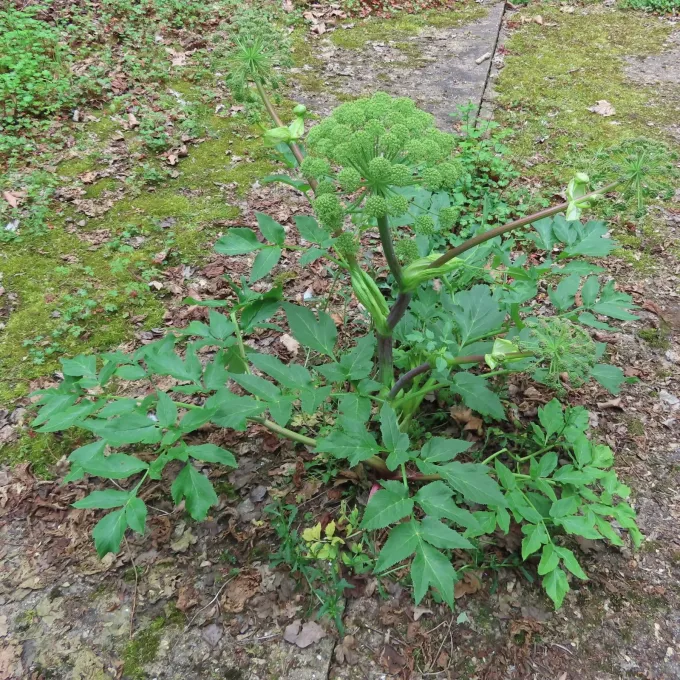
Description
Sowing dates
Angelica archangelica is a biennial plant belonging to the Apiaceae family. It is vital to use fresh seeds for sowing, as viability drops significantly after just a few months of storage at room temperature.
Sowing should take place immediately after seed harvest in late summer or early autumn. This timing allows the seeds to undergo natural stratification in the soil, ensuring a higher germination rate the following spring.
If spring sowing is required, seeds must be artificially stratified at temperatures between 0 and 5°C for at least 8 weeks. Without this cold treatment, the majority of seeds will remain dormant and fail to sprout.
The optimal sowing density involves rows spaced about 50 to 60 cm apart. Seeds should be sown shallowly, barely covering them with soil, as they require some light for optimal germination and are prone to rot if buried too deeply.
During the first year, the plant develops a large basal rosette of leaves and a deep taproot. Proper spacing is essential to ensure that each plant has enough nutrients to develop a robust root system, which is the primary goal of cultivation.
Growing requirements
Angelica thrives in cool, moist climates and is highly demanding regarding soil moisture. It is best suited for fertile, loamy soils that are rich in organic matter and possess excellent moisture-retention properties.
While the plant loves moisture, it cannot tolerate waterlogged conditions, which lead to root rot. A site with a high water table but good natural drainage is ideal for maintaining the plant's health throughout the vegetative season.
Regarding light, Angelica grows well in full sun, but it also adapts comfortably to partial shade. In warmer regions, light shade helps protect the plant from excessive heat, which can cause the leaves to wilt and reduce metabolic efficiency.
The soil pH should ideally range between 5.5 and 7.0. Preparing the ground with well-rotted manure or compost in the autumn prior to planting provides the necessary nutrients for vigorous initial growth.
As a hardy biennial, it withstands frost well. However, young plants are vulnerable to weed competition. Mulching can help suppress weeds and maintain the consistent soil moisture that the species requires to reach its full potential.
Yield
The economic yield of Angelica is centered on its roots, which are typically harvested at the end of the first year of growth or early in the spring of the second year. High-quality production can reach 15–25 decitonnes of dry roots per hectare.
Root size and oil concentration are the two most important quality markers. Yield is maximized when plants are not allowed to bolt prematurely; therefore, irrigation during dry spells is essential to maintain steady vegetative growth.
Good soil structure is critical for root development. Compacted or stony soils will result in stunted, distorted roots that are difficult to clean and process, thereby reducing the overall value of the harvested crop.
Fertilizer application should be balanced. Excess nitrogen promotes lush foliage but may decrease the concentration of essential oils in the root, which is the primary value component for the herbal and pharmaceutical markets.
Standardized harvest protocols ensure consistency. Roots must be handled carefully during extraction to prevent damage, as wounded tissues can quickly become susceptible to pathogens, negatively impacting the total marketable yield.
Main diseases and pests
Common pests include aphids, which often cluster on the stems and young leaves, as well as leaf-mining insects that can reduce the photosynthetic capacity of the plant. Monitoring should be routine during the active growing season.
Fungal diseases are the biggest threat, particularly powdery mildew and various leaf spot pathogens. These are exacerbated by humid, stagnant air conditions, emphasizing the need for proper row spacing and air circulation.
Root rot, caused by various soil-borne fungi, is a frequent issue in poorly drained fields. Once a plant is infected, it is usually necessary to remove it entirely to prevent the spread of the fungus to adjacent plants.
- Regular inspection for early signs of disease.
- Avoidance of monoculture by rotating crops every few years.
- Ensuring good drainage to prevent standing water near the base.
When chemical interventions are necessary, choosing approved substances with short pre-harvest intervals is essential to keep the crop safe for commercial use in food and medicine production.
Harvesting
Harvesting is performed by digging up the roots, preferably using a mechanical harvester designed for root crops to minimize breakage. Immediate washing is required to remove all soil residues before processing.
For drying, the roots are cleaned, trimmed of their foliage, and sliced into segments. Drying must occur in a well-ventilated space, shielded from direct sunlight to preserve the volatile essential oils that give Angelica its scent.
Temperature control during artificial drying is crucial; exceeding 40°C will result in the loss of aromatic compounds. The drying process is complete when the roots are brittle and snap easily rather than bending.
Storage of the finished product requires cool, dark, and dry conditions. Moisture ingress must be prevented, as the high sugar content in the dried roots can attract mold or pests if stored in humid environments.
Properly cured and stored, the root material maintains its therapeutic properties for up to three years. Periodic quality checks for scent and appearance are recommended to ensure the product meets market standards.