
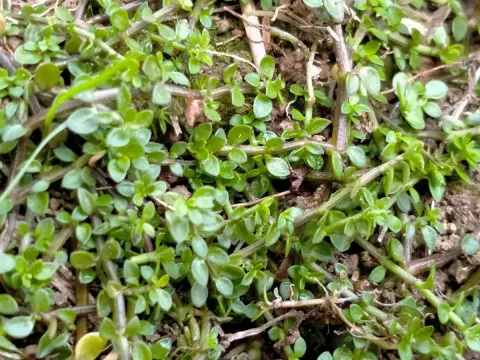
Tetrachondra
Tetrachondra
Tetrachondra is a genus of perennial herbaceous plants belonging to the family Tetrachondraceae. It is a rare group of plants primarily found in the Southern Hemisphere, often occupying environments characterized by constant moisture and cool temperatures.
What the section contains

Tetrachondra
The plant demonstrates high adaptability to saturated soils, making it an ideal candidate for riparian zones or garden areas near ponds. It requires consistently moist, nutrient-rich soil to thrive and maintain its dense, ground-hugging growth habit.
Environmental requirements include protection from excessive solar radiation and heat stress. In regions with high summer temperatures, the plant struggles, necessitating shade and frequent irrigation to mimic its native alpine or wetland microclimates.
Botanically, it is defined by its prostrate stems and small, opposite leaves. These plants are specialized to survive in habitats where water availability is stable, often showing specialized physiological traits for gas exchange in aquatic or semi-aquatic conditions.
In terms of usage, Tetrachondra is valued in specialized landscaping for its ability to form cohesive mats. It is rarely used as a field crop; instead, it serves as a niche ornamental plant for botanical collections and moisture-dependent landscape designs.