
Tripolitan mullein
Verbascum tripolitanum
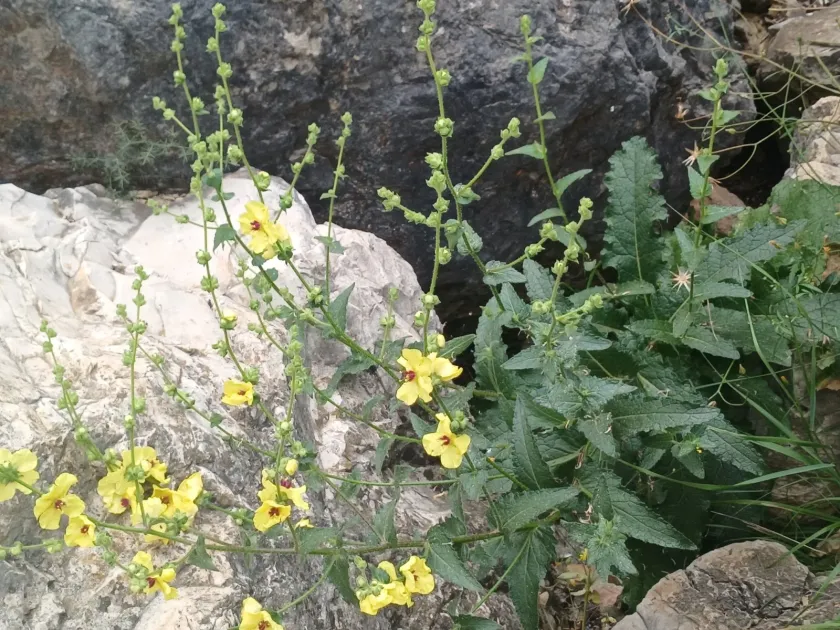
Description
Growing requirements
Tripolitan mullein (Verbascum tripolitanum) is a herbaceous plant belonging to the Scrophulariaceae family. Native to the Mediterranean region, it has adapted to harsh environments characterized by low precipitation and high solar intensity.
Botanically, the plant is distinguished by its dense, tomentose leaves which serve as an adaptation to reduce transpiration. It typically develops a large basal rosette in its first year, followed by a tall, striking inflorescence in its subsequent growth cycles.
The plant requires well-drained, porous soils to thrive. It is particularly suited to sandy, loamy, or rocky soils, as it cannot tolerate waterlogging, which often leads to root collar rot and other fungal complications.
Environmental conditions must include full sun exposure. Inadequate light availability severely affects the plant's structural integrity and the development of its chemical properties, which are often sought for botanical purposes.
Management involves minimal irrigation once the plants are established. The key to successful cultivation is selecting an site with excellent airflow and soil drainage, combined with a weed management program during the initial establishment phase.
Main diseases and pests
The most common threats include root rot and mildew, typically triggered by improper soil moisture levels or poor humidity management within the crop rows.
Pests such as aphids and leaf-eating beetles can cause significant damage to the plant's foliage. Regular scouting is essential to identify infestations before they reach economic threshold levels.
Crop rotation is strongly recommended to prevent the accumulation of soil-borne pathogens. Using certified, healthy seeds also reduces the initial risk of introducing diseases to the field.
Integrated pest management (IPM) strategies, including the use of beneficial insects and biological fungicides, are highly recommended over synthetic pesticides to preserve the quality of the harvested material.
Mechanical weed control should be done cautiously to avoid damaging the shallow, fibrous root systems of the young plants, which can create entry points for opportunistic infections.