
Pheasant's eye
Adonis vernalis L.
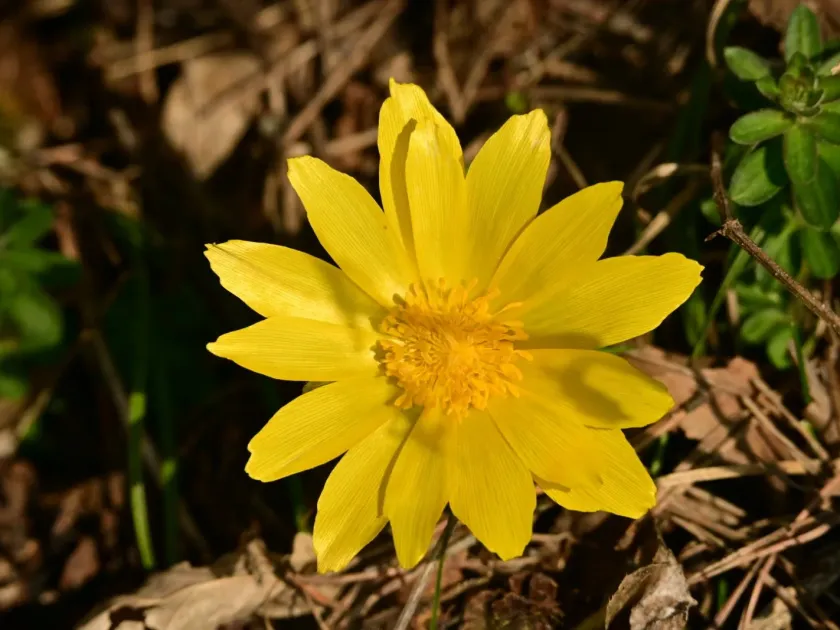
Description
Sowing dates
Cultivating Adonis vernalis in agricultural settings is challenging due to the very low germination rate of the seeds. Seeds possess a deep physiological dormancy and require a prolonged period of cold stratification to break this state before germination can occur.
The most successful propagation method is sowing freshly harvested seeds in mid-summer, allowing them to undergo natural stratification during the winter months. Seedlings typically appear only in the following spring, necessitating a well-marked and weed-free site.
Vegetative propagation via division of mature 4 to 5-year-old rootstocks is often preferred for maintaining plantation uniformity. Division should be performed in late summer or early autumn, ensuring the new plants establish before the ground freezes.
A typical planting density is 4 to 6 plants per square meter. It is essential to understand that Adonis vernalis is a slow-growing perennial, and commercial harvesting of the aerial parts should not begin until at least the third or fourth year of growth.
During the first year, plantations require careful moisture management. The topsoil must remain consistently moist during the germination period to ensure the survival of the delicate seedlings, as drying out at this stage can lead to complete failure.
Growing requirements
As a member of the Ranunculaceae family, Adonis vernalis is highly photophilous and requires full sun exposure to thrive. Insufficient light results in etiolated growth and a significant reduction in the concentration of cardiac glycosides in the biomass.
The plant thrives in fertile chernozem soils and sandy loams with high calcium content. Its natural habitat, which spans steppe regions, indicates a preference for well-aerated, structurally stable soils that provide excellent drainage for the root system.
The soil pH should ideally be neutral to slightly alkaline (pH 7.0–8.0). If the soil is acidic, liming must be carried out well in advance of planting to prevent poor growth rates and susceptibility to various pathogens that prefer acidic environments.
Adequate drainage is the most critical environmental requirement. The root system of the pheasant's eye is prone to rotting when exposed to standing water or waterlogged conditions, particularly during the transition from winter to spring.
Adonis vernalis is exceptionally cold-hardy and can withstand harsh continental winters without protection. However, mulching young plantations during the first winter is recommended to prevent frost heaving, which can expose roots to freezing temperatures.
Yield
The yield of medicinal biomass is heavily dependent on the age and vigor of the plantation. Once established, a well-managed plantation can provide consistent yields for nearly a decade, provided that the rootstocks are not damaged during harvest.
Average yields of dry herb range from 1.5 to 3 decitonnes per hectare. These figures fluctuate based on the weed management strategy, the level of mineral nutrition provided, and the specific density of the plants within the rows of the plantation.
The primary medicinal product is the aerial herb, harvested during the peak flowering stage. Timing is critical; harvesting too early results in low yields, while waiting until fruit development leads to a rapid decline in the plant's active chemical content.
Pharmaceutical use of Adonis vernalis involves extracting cardiac glycosides for heart medications. These compounds have proven clinical benefits in treating chronic heart failure and associated nervous system disorders, making the crop economically valuable.
To sustain high productivity, plantations require balanced fertilization, primarily focusing on phosphorus and potassium. Excessive nitrogen application should be avoided as it stimulates disproportionate leaf growth, which may dilute the active ingredients in the herb.
Main diseases and pests
While Adonis vernalis is relatively resistant to many diseases, it can become susceptible to powdery mildew under suboptimal environmental conditions. This disease manifests as a white coating on the leaves, negatively affecting the quality of the raw material.
Root rot is the most serious threat to plantation longevity, often caused by stagnant moisture or poor soil structure. Once established, these fungal infections can spread rapidly, leading to patchy growth and eventually the death of entire root systems.
Various leaf-eating insects pose a risk, particularly during the spring when the plants are producing new, tender growth. Regular monitoring is necessary to identify infestations early and apply appropriate biological or chemical controls if required.
Aphids may occasionally infest the plant's tops during hot, dry spells. By extracting plant sap, they weaken the host, making it more vulnerable to secondary infections. Integrated pest management should be used to protect the efficacy of the crop.
Weed competition is a significant threat to overall crop health. Weeds not only compete for nutrients and light but also provide a micro-environment that fosters high humidity, creating ideal conditions for the development of pathogenic fungi.
Harvesting
Harvesting must occur during the period of full flowering to ensure the maximum concentration of therapeutic compounds. This brief window, typically in April or May, requires efficient labor management to process the entire plantation in a timely manner.
The stems must be cut at a height of at least 5–10 cm above the soil surface. Preserving the lower portion of the plant is vital to ensure regeneration in the following growing season and to prevent the degradation of the underlying rootstocks.
Post-harvest handling must be swift; raw biomass should not be left in piles, as internal heating occurs rapidly. This fermentation process destroys the cardiac glycosides, rendering the medicinal crop worthless if left untreated after cutting.
Drying should be performed in well-ventilated sheds or industrial dehydrators at temperatures not exceeding 60 degrees Celsius. Maintaining this temperature range is essential to preserve the natural color and chemical integrity of the harvested herb.
After drying, the product must be stored in cool, dark, and dry conditions. As the dried herb is hygroscopic, moisture-proof packaging is necessary to prevent re-absorption of water, which could lead to mold development and loss of market quality.