
Pheasant's eye
Adonis annua L.
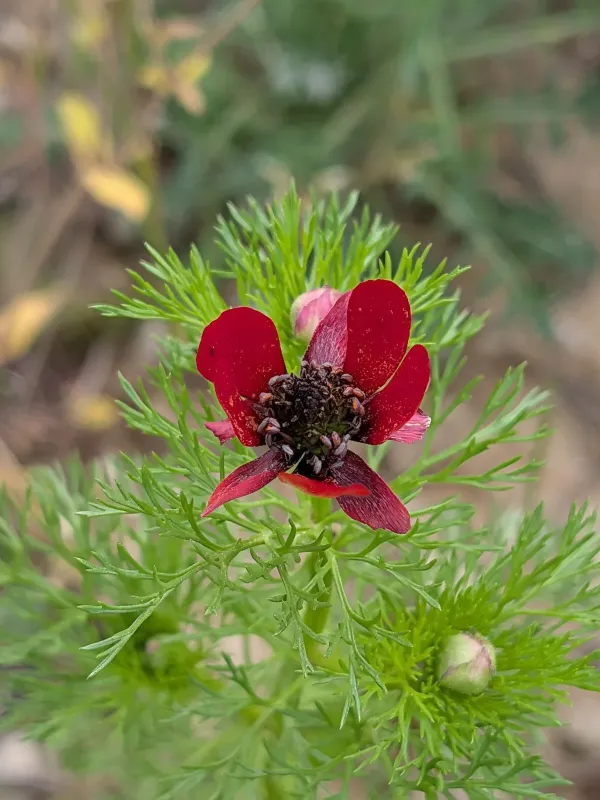
Description
Sowing dates
Pheasant's eye is an annual herbaceous plant belonging to the Ranunculaceae family. Seeds are typically sown in late autumn for wintering or in early spring as soon as the soil is workable.
Pre-chilling or stratification of seeds is highly recommended for spring sowing to ensure high germination rates, as the seeds often exhibit natural dormancy patterns.
The seeds should be sown at a shallow depth of approximately 1–2 centimeters, ensuring they are lightly covered with fine, well-draining soil to facilitate quick emergence.
For ornamental purposes, sowing in rows with a spacing of 25–30 centimeters allows for easier weeding and maintenance, promoting a healthier environment for the seedlings.
It is important to select an open, sunny location, as this plant requires full sun to thrive and reach its full potential during the vegetative growth cycle.
Growing requirements
The species prefers well-drained, calcareous soils that are rich in mineral content but not excessively fertile, as nutrient overload can lead to excessive foliage growth at the expense of flowers.
Proper drainage is essential; Adonis annua cannot tolerate waterlogged conditions, which often result in root rot and total plant loss during the spring rain season.
The plant demonstrates good tolerance to moderate drought once established, making it a reliable choice for gardens that receive standard rainfall or minimal irrigation.
While the plant is relatively low-maintenance, a balanced liquid fertilizer applied at the onset of the budding stage can enhance flower color and extend the blooming duration.
Acidity levels should be monitored, as this plant specifically thrives in neutral to slightly alkaline soils; liming may be necessary if the local soil is acidic.
Main diseases and pests
Common plant health issues include powdery mildew, which manifests as a white dusty coating on leaves, particularly in stagnant or humid climate conditions.
Root rot, caused by various soil-borne fungi, remains the primary threat, usually triggered by poor drainage or over-watering during the early stages of growth.
Aphids can be problematic during the blooming season, feeding on tender plant parts and potentially introducing viral infections that stunt development.
Effective management strategies include ensuring adequate air circulation between plants and applying organic or synthetic fungicides when symptoms first appear.
- Thinning seedlings to prevent overcrowding.
- Monitoring for insect infestations early.
- Removing debris to prevent fungal persistence.