
Adonis aestivalis
Adonis aestivalis L.
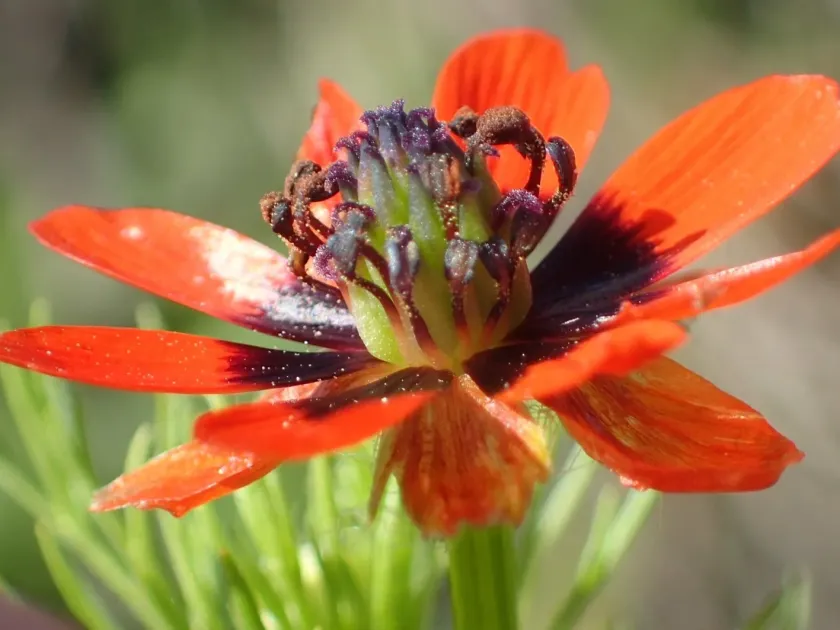
Description
Sowing dates
Adonis aestivalis is an annual herbaceous plant belonging to the Ranunculaceae family. In agricultural settings, its seeds are typically sown in late autumn or early spring, as soon as soil conditions allow for mechanical field preparation.
Natural stratification is often beneficial for achieving high germination rates, making late autumn seeding a popular practice in many regions. Seeds should be sown at a depth of 1–2 centimeters, ensuring that they maintain good contact with the surrounding soil for consistent moisture absorption.
Spring sowing requires a well-prepared seedbed, ensuring that the soil surface is level to prevent water logging, which can damage emerging seedlings. The crop has moderate seedling vigor, so it is essential to ensure the field is free from perennial weeds before planting.
For commercial production, row planting with spacing of 20–30 cm is recommended to facilitate mechanical weeding and ensure proper air circulation between rows. Avoid overcrowding the plants, as this increases humidity levels and promotes fungal growth.
Post-emergence care includes gentle cultivation between rows to eliminate crusts and weeds. As the plants develop their root systems, they become more robust, though initial weed control remains critical for ensuring optimal crop establishment and uniformity.
Growing requirements
Adonis aestivalis thrives in open, sunny locations. It is a light-demanding crop, and any significant shading during the growing season can result in leggy plants and reduced concentrations of bioactive compounds within the biomass.
The crop prefers light-textured soils, such as sandy loams or fertile chernozems. Proper drainage is a non-negotiable requirement, as the plants are highly susceptible to root damage caused by waterlogged or stagnant soil conditions during the vegetative stage.
Soil pH should be neutral or slightly alkaline. In acidic soil conditions, plant growth is noticeably stunted, making liming a necessary agrotechnical intervention to improve yields and overall crop health in sub-optimal fields.
The plant demonstrates good adaptability to various moderate climates but is sensitive to prolonged droughts, particularly during the flowering phase. Adequate soil moisture levels during critical development stages are essential for maintaining high-quality raw material production.
Fertilization strategies focus primarily on phosphorus and potassium to support flowering and secondary metabolite production. Nitrogen applications should be managed carefully to avoid excessive vegetative growth at the expense of floral development.
Main diseases and pests
Common fungal diseases, such as powdery mildew and root rot, are the primary threats to Adonis aestivalis production. These diseases often emerge under conditions of high air humidity or when crop density is too high, preventing proper ventilation.
Effective disease management begins with rigorous crop rotation, with a recommended interval of at least 3–4 years before returning the crop to the same plot. Removing crop residues promptly after harvest is a vital sanitary measure to reduce pathogen carryover.
Aphids and spider mites are the most frequent insect pests. They feed on plant sap, weakening the foliage and potentially reducing yield. When infestation thresholds are exceeded, the application of appropriate biological or chemical insecticides is necessary.
Young seedlings can be vulnerable to flea beetles during the early stages of growth. Continuous field monitoring is recommended to ensure early detection of pest pressure, allowing for timely intervention and minimizing the impact on crop population density.
Integrated pest management, focusing on field sanitation and proper spacing, is the foundation of successful crop protection. Maintaining plant vigor through optimal nutrition also helps the crop withstand minor pest attacks more effectively.
Harvesting
Harvesting should be performed during the peak flowering phase, when the concentration of medicinal compounds in the aerial parts is at its maximum. The characteristic vibrant red color of the flowers is the best indicator of the optimal harvest window.
The crop is harvested by mowing the aerial biomass at a height of 5–10 cm above the soil surface. This task should be carried out during dry weather, preferably in the morning after the dew has evaporated, to prevent excess moisture in the collected material.
Immediate processing is crucial for maintaining quality. The harvested material must be dried quickly in a well-ventilated area or specialized drying facilities at temperatures not exceeding 40–50 degrees Celsius to prevent degradation and fungal growth.
When harvesting for seeds, farmers must wait until the fruit maturation stage, indicated by a change in seed coat color. Harvesting must be timely to prevent seed shattering, as the seeds are prone to shedding once they reach full maturity.
Stored raw material requires a cool, dry, and dark environment with excellent ventilation. Maintaining low humidity levels in storage is essential to preserve the biological integrity and potency of the dried product for extended periods.