
Giant knotweed
Fallopia sachalinensis (F. Schmidt) Ronse Decr.
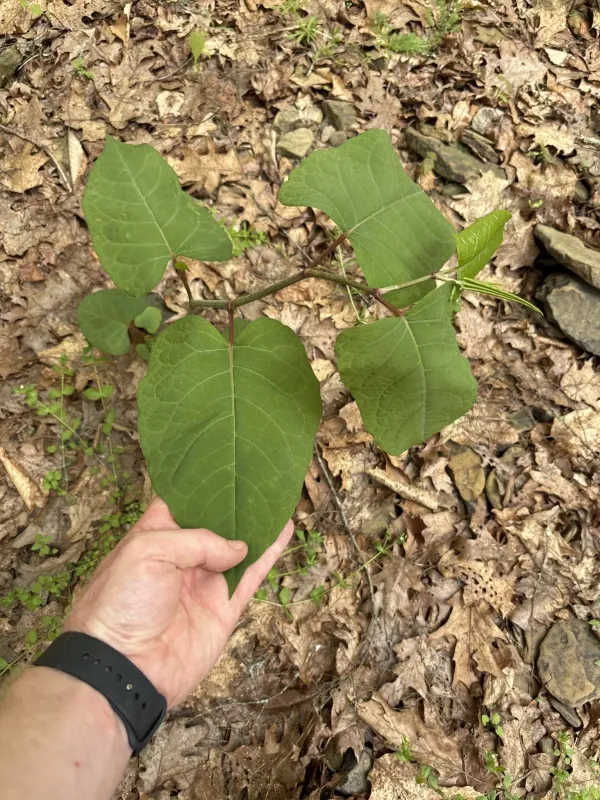
Description
Sowing dates
Giant knotweed, a member of the Polygonaceae family, is a vigorous perennial herbaceous plant. In commercial agriculture, propagation is primarily performed via vegetative means—using rhizome divisions or stem cuttings, which ensures rapid establishment and rooting.
The optimal planting time for rhizomes is early spring, once the soil has warmed to 8-10 degrees Celsius, or in the autumn before the first heavy frost. Spring planting allows the root system to establish robustly before the onset of intense summer heat.
Preparation of the site requires deep ploughing to a depth of up to 30 centimeters, followed by the incorporation of organic fertilizers like manure or compost. Because the plant is highly aggressive and spreads rapidly, it should be grown in areas where its root expansion can be effectively managed.
The spacing between rows should be at least 1-1.5 meters to allow for maintenance tasks and efficient mechanized harvesting. Planting density depends on the planned lifespan of the plantation, which can effectively produce for 15-20 years.
After planting, consistent irrigation is necessary until the cuttings are fully established, as young plants are particularly sensitive to moisture deficits in the topsoil during the first few weeks of growth.
Growing requirements
This crop is highly adaptable, though it thrives best in loamy soils with excellent drainage and high humus content. The plant can tolerate brief periods of waterlogging, although stagnant water in the root zone is detrimental.
Good light exposure is required for optimal growth, although giant knotweed can tolerate partial shade. However, maximum biomass yield is achieved in open, sunny locations that warm up quickly in the spring.
Sufficient moisture is a key factor for success: the crop requires regular watering during its rapid stem-growth phase. In drought conditions, growth slows significantly, which directly impacts the total biomass yield per harvest.
The plant is moderately tolerant of soil acidity but prefers neutral to slightly acidic conditions. On highly acidic soils, liming should be performed before plantation establishment to optimize pH levels for better nutrient uptake.
Giant knotweed possesses excellent winter hardiness; rhizomes are capable of surviving severe frosts without protection, making it a viable crop for regions with harsh climates where other fodder crops might fail to overwinter.
Yield
Giant knotweed is highly valued as a high-yielding silage crop, capable of producing significant volumes of green mass in a single season. With proper management, yields can reach 60–100 tonnes of green mass per hectare.
High productivity is driven by the rapid growth rate of stems, which can reach heights of 3-4 meters. Typically, two or three harvests are conducted per season, depending on regional climatic conditions and the speed of regrowth.
The first harvest should be performed before the flowering phase begins, when nutritional value in the stems is at its peak and the fibers have not yet become excessively lignified. This ensures the production of high-protein silage.
Subsequent harvests are carried out as the secondary growth (regrowth) reaches the desired maturity. While the biomass volume of the second and third cuts may be lower than the first, the nutritional value remains high for livestock.
It is important to note that peak yield is typically achieved from the third or fourth year after planting, once the root system has fully colonized the area and can supply the plant with all necessary resources.
Main diseases and pests
Giant knotweed exhibits high resistance to most typical agricultural diseases due to the presence of specific bioactive chemical compounds in its tissues. Significant epiphytotics are extremely rare on this crop.
Occasionally, in conditions of high humidity and poor air circulation, powdery mildew may appear on the foliage. Proper planting density and timely harvesting are sufficient as preventive measures to maintain plant health.
Pests rarely cause significant damage to knotweed plantations. Aphids may affect young shoots at the beginning of the growing season, but large-scale pest control using insecticides is generally not required.
The main 'threat' associated with the crop is its extreme invasiveness. If the plant escapes the intended growing area, it becomes a difficult-to-eradicate weed capable of outcompeting native vegetation.
To control spreading beyond the field boundaries, mechanical removal of rhizomes or deep ploughing is recommended. Chemical control (herbicides) is effective but requires strict safety protocols, especially near water bodies.
Harvesting
Harvesting giant knotweed is performed using forage harvesters equipped with shredders. The machinery must be capable of handling thick, succulent stems, which structurally resemble bamboo and require robust cutting equipment.
Harvest timing is critical for maintaining feed quality. Harvesting begins when the plants reach a height of 1.5–2 meters, but strictly before mass formation of flower panicles begins to prevent stem hardening.
Freshly cut material has high moisture content, so when ensiling, it is recommended to add dry components or use preservatives. This reduces nutrient loss through runoff and improves the fermentation process in silage pits.
When the plant is utilized as a honey source, harvest schedules must be adjusted to ensure the plant can bloom, providing a late-season nectar source for pollinators.
After the final harvest, the plantation can be lightly fertilized with minerals to stimulate root system recovery and energy storage before the plant enters its winter dormancy period.