
Sudan grass
Sorghum x drummondii (Steud.) Millsp. & Chase
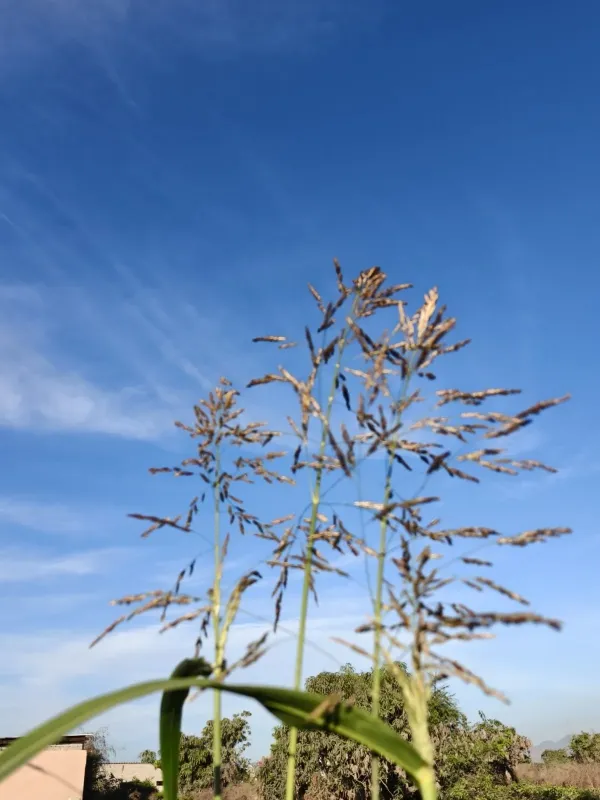
Description
Sowing dates
Sudan grass is a warm-season crop, so planting should only begin when soil temperatures at a depth of 10 centimeters reach 12-14 degrees Celsius.
The optimal sowing window in most temperate regions occurs in May, once the risk of frost, which is detrimental to seedlings, has passed.
Planting too early into cold soil can result in seed rot, leading to sparse stands and a costly requirement for replanting the entire field.
To maximize biomass production, it is essential to ensure a uniform seeding depth, which typically ranges from 4 to 6 centimeters on light soils.
Seeding rates depend on the region and intended use, generally varying between 15 and 25 kilograms of seed per hectare.
Growing requirements
This crop belongs to the Poaceae family and is closely related to sorghum, which contributes to its remarkable drought and heat tolerance.
Sudan grass performs well on various soil types, though it achieves the best results on fertile loams with a neutral or slightly alkaline pH.
The plant is highly sensitive to waterlogging and poor drainage, making waterlogged areas completely unsuitable for its successful production.
With an extensive root system reaching depths of over two meters, the plant is capable of extracting water from deep soil horizons efficiently.
For high-intensity growth during the season, application of mineral fertilizers, particularly nitrogen, is recommended to boost total yield significantly.
Yield
The yield of Sudan grass is directly influenced by climatic conditions, irrigation management, and the nutrient status of the soil.
Under optimal conditions, farmers can expect up to 3-4 successful cuttings per season, making it an extremely productive forage option.
Average green mass yields range from 30 to 50 tons per hectare, though irrigated fields can significantly exceed these baseline figures.
When harvested as hay, the crop provides roughly 8-12 tons of dry matter, noted for its high nutritional value for dairy and beef cattle.
Maintaining proper intervals between cuttings is critical to ensure the plant has enough time to recover and regenerate nutrients.
Main diseases and pests
Common diseases affecting this crop include bacterial blight, various leaf spots, and smut, which can degrade the overall quality of the fodder.
Key insect pests include frit flies, aphids, meadow moths, and wireworms, which target seeds or succulent plant tissue during development.
To mitigate these risks, it is highly recommended to follow strict crop rotation practices, avoiding planting Sudan grass after other grass species.
Prevention strategies should include high-quality seed treatment prior to planting and vigilant control of weeds within the field.
When pest infestations exceed economic thresholds, authorized insecticides should be applied while strictly adhering to safety harvest intervals.
Harvesting
The first cut should ideally take place during the heading stage, as the plant reaches its peak nutritional quality at this specific time.
Subsequent cuts should be timed according to the regrowth of the plant, preventing stems from becoming too coarse and woody for livestock.
When producing hay, rapid drying is necessary to preserve the green color and essential vitamin content of the forage.
Cutting heights of 7-10 centimeters are recommended to stimulate faster and more vigorous regrowth from the remaining basal buds.
If the objective is seed production, harvest should commence when the panicles on the main stem are mature to prevent excessive grain shattering.