
Hebe pauciramosa
Veronica pauciramosa
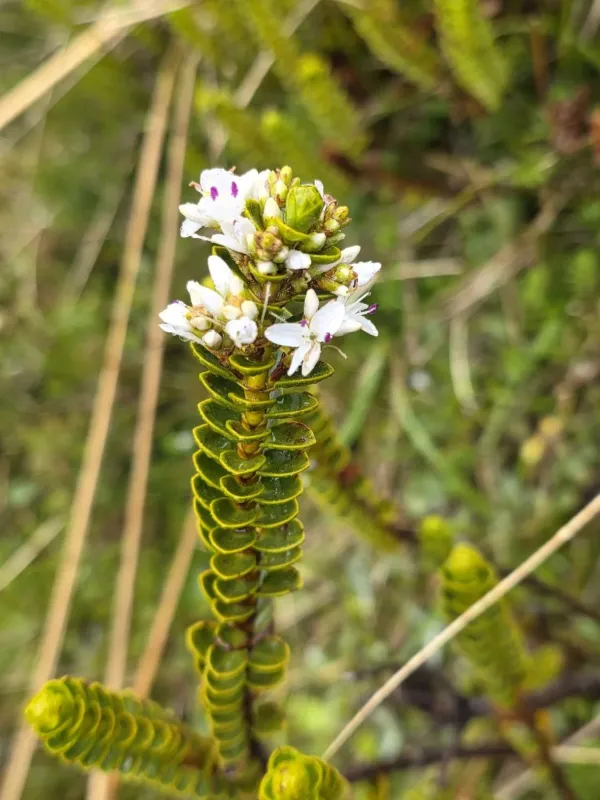
Description
Growing requirements
Veronica pauciramosa, often classified within the Hebe genus, is a distinct perennial shrub belonging to the Plantaginaceae family. It is native to the alpine regions of New Zealand, where it thrives in rocky, high-altitude environments.
This plant is known as a "whipcord hebe" due to its botanical structure. It forms dense, low-growing mounds. Its foliage consists of small, scale-like leaves that are tightly pressed against the stems, providing excellent wind resistance and water retention in harsh climates.
The cultivation of this species requires well-drained, gritty soils. In garden settings, it is essential to incorporate significant amounts of sand or small stone chippings into the substrate to prevent waterlogging, which the root system cannot tolerate.
Regarding climate, it prefers cooler, temperate zones with plenty of sunlight. While it is hardy, the plant struggles in regions with high humidity combined with high heat, which can lead to rapid decline. Adequate airflow is crucial for maintaining the health of the dense foliage mounds.
In terms of usage, this plant is highly prized in rock garden design and alpine landscaping. Its structural form remains attractive throughout the year, providing evergreen ground cover that does not compete aggressively with other small alpine species.
Main diseases and pests
The most common health issues for Veronica pauciramosa are related to fungal pathogens triggered by poor drainage. Preventing stagnant water at the crown of the plant is the most effective way to avoid root and stem rots that can lead to rapid death.
Pests are generally less of an issue compared to environmental factors; however, slugs and snails can cause damage to the dense foliage. Keeping the immediate area around the plant clean of organic debris helps to reduce habitat for these pests.