
Hector's hebe
Veronica hectorii
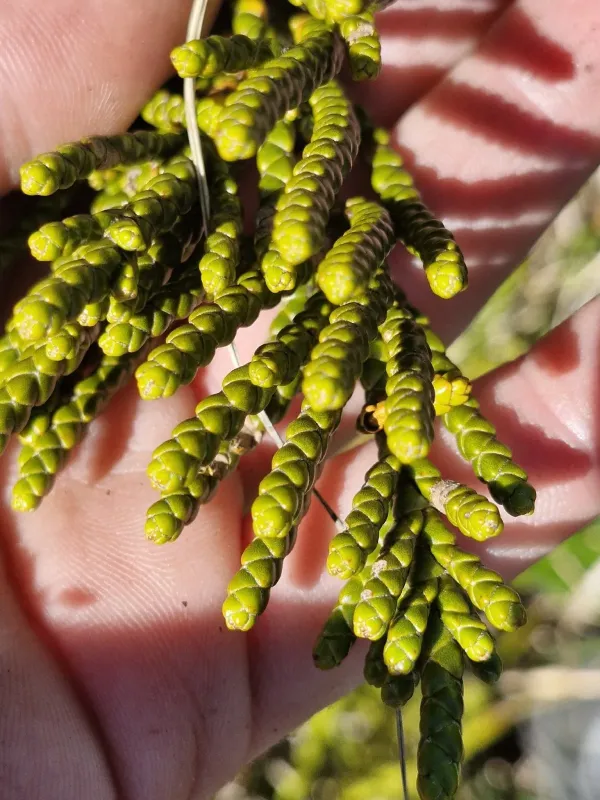
Description
Growing requirements
Hector's hebe (Veronica hectorii) is a distinctive evergreen shrub belonging to the Plantaginaceae family. Originally from the alpine and subalpine regions of New Zealand, it is highly valued for its architectural form.
The plant is characterized by its scale-like leaves that are pressed tightly against the stem, creating a whip-cord appearance often compared to miniature conifers. It is a slow-growing species that retains a dense, compact habit over many years.
Optimal growth requires well-draining, gritty, or sandy soil. It is essential to avoid moisture-retentive clays, as waterlogged conditions quickly lead to root rot. Good drainage is the most critical factor for survival.
This species thrives in sunny locations with cool, well-ventilated conditions. While it is hardy in many climates, it benefits from protection against harsh drying winds and excessive winter moisture in colder regions.
In landscaping, it is perfect for rock gardens, trough plantings, and alpine beds. Its year-round structural interest makes it an excellent choice for low-maintenance, arid-style garden displays.
Main diseases and pests
The primary threats to Veronica hectorii are fungal pathogens encouraged by excessive humidity and poor air circulation. Root rot is the most common cause of death in cultivated specimens.
Pests such as aphids and spider mites can occasionally affect the foliage, particularly during hot, dry summer months. Monitoring is advised to catch any infestations before they cause significant damage.
To prevent disease, ensure that the crown of the plant stays dry. Mulching with gravel or decorative stones around the base helps keep the lower foliage away from damp soil and inhibits fungal spread.
Avoid heavy fertilizer applications. Excess nitrogen causes rapid, succulent growth that is less hardy and more susceptible to attacks by sucking insects and various bacterial infections.
Pruning should be kept to a minimum, focusing only on removing dead or damaged branches. Regular air pruning by environmental conditions is usually sufficient for this species given its slow-growth habit.