
Veronica dillenii
Veronica dillenii
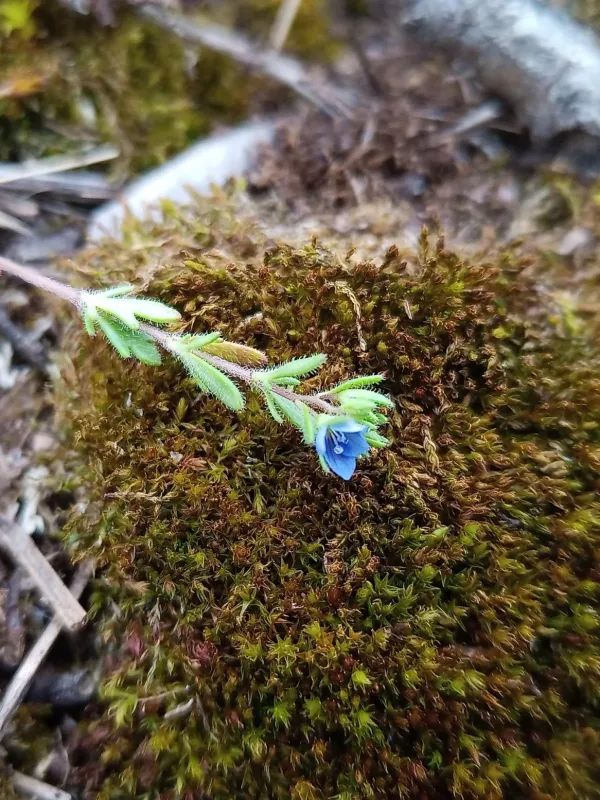
Description
Growing requirements
Veronica dillenii is an annual herbaceous plant belonging to the Plantaginaceae family. In agricultural settings, it is typically categorized as a weed that colonizes sparse vegetation and disturbed soil, particularly in areas with sandy or nutrient-poor substrates.
The species is native to temperate Eurasia, where it thrives in open, sunny environments. It is frequently observed in dry grasslands, open fields, and along field margins where soil disturbance allows for rapid germination in the early spring months.
This plant prefers well-drained, sandy soils and is highly adapted to moisture-limited environments during its active growth period. It does not tolerate shade well, which makes it a poor competitor against established, high-density crop canopies.
Botanically, it is characterized by its small size, dense glandular hairs on the stems and leaves, and blue-violet flowers arranged in loose racemes. These traits are evolutionary adaptations to minimize water loss and complete the life cycle before seasonal droughts.
Agricultural management primarily focuses on mechanical cultivation to disrupt its growth cycle. Because it is a relatively weak competitor, sound agronomic practices, such as maintaining healthy crop density and proper tillage, are usually sufficient to suppress it.
Main diseases and pests
While not a primary economic crop, Veronica dillenii can serve as an alternative host for various plant pathogens. Potential threats include the spread of fungal diseases such as powdery mildew or downy mildew to susceptible neighboring crops.
The primary agricultural impact of this plant is the depletion of moisture and soil nutrients in the early vegetative stages of major crops. Effective management entails preventing seed set through early cultivation or targeted herbicidal applications in high-density patches.