
Hebe dieffenbachii
Veronica dieffenbachii
Description
Growing requirements
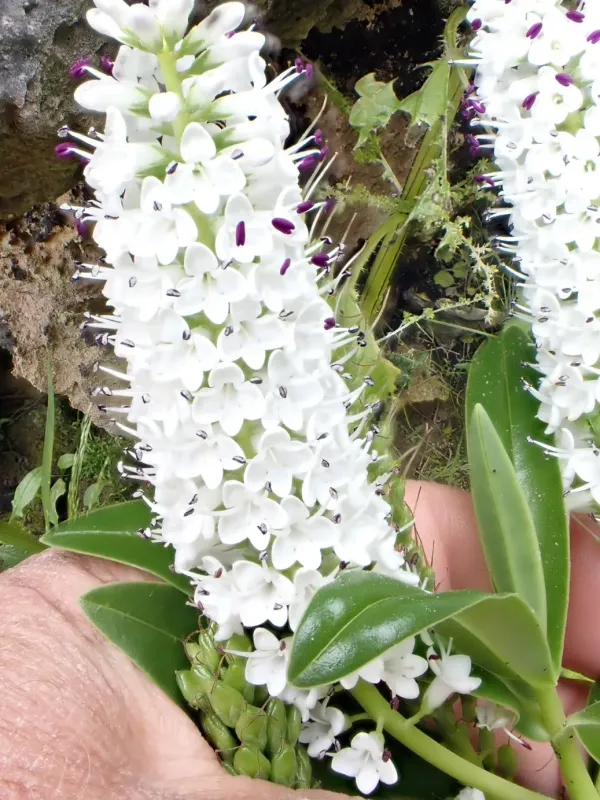
Hebe dieffenbachii (Veronica dieffenbachii) is a perennial evergreen shrub belonging to the Plantaginaceae family. It is native to the Chatham Islands of New Zealand, where it thrives in coastal rocky habitats, showcasing a high degree of salt tolerance.
The botanical profile of the plant includes leathery, oblong-shaped leaves and dense racemes of flowers, which are typically shades of light purple. It creates a robust, low-spreading mound that is prized for its year-round structural interest.
Regarding soil requirements, the crop demands excellent drainage to prevent root rot. A gritty, neutral to slightly acidic soil mix is recommended, mimicking its natural rocky environment where water flows away from the roots instantly.
Climatic conditions should ideally mirror a maritime environment with mild winters and moderate humidity. While the plant can handle some exposure, it performs best in positions protected from harsh, drying winds and direct midday sun in hot climates.
In commercial and landscape horticulture, the plant is widely used as an ornamental feature in rock gardens and coastal landscaping. Its ability to maintain a dense, compact form makes it an excellent choice for low-maintenance garden border designs.
Main diseases and pests
The primary threats to this species are soil-borne pathogens, specifically fungal diseases caused by standing water in the root zone, leading to rapid foliage wilting and plant death.
Common insect pests include scale insects and aphids, which tend to congregate on tender new growth. Integrated pest management strategies, such as biological control or insecticidal soap, are effective in controlling these outbreaks.