
Ivy-leaved speedwell
Veronica cymbalaria
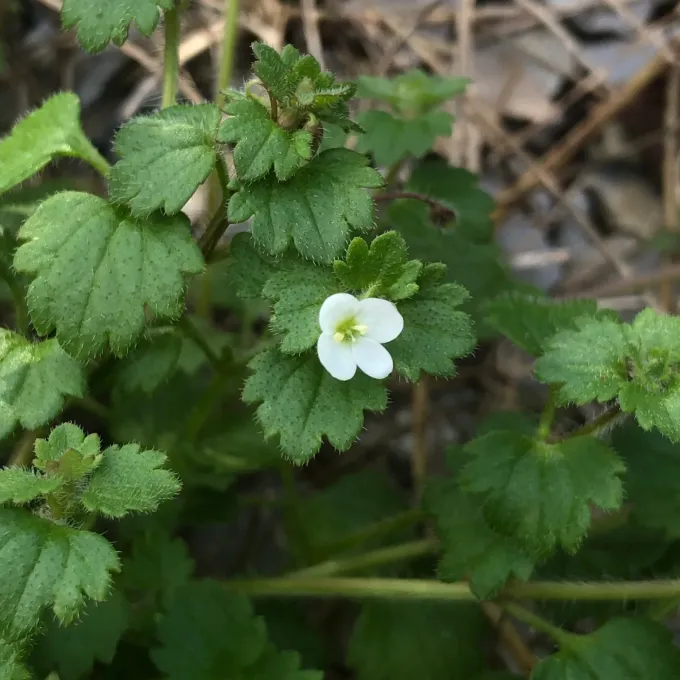
Description
Growing requirements
Veronica cymbalaria, commonly known as ivy-leaved speedwell, is an annual herbaceous plant belonging to the Plantaginaceae family. It is characterized by creeping stems that often root at the nodes, allowing the plant to spread effectively across open soil surfaces in favorable conditions.
The species originates from the Mediterranean region, where it is well-adapted to mild winters and warm springs. In agricultural settings, it thrives in well-drained, fertile soils with a neutral pH, frequently appearing as a weed in winter crops, gardens, and along field margins where soil moisture is consistent.
Botanically, it features alternate, lobed leaves resembling those of ivy, and solitary, pale flowers emerging from leaf axils. Its life cycle is typically synchronized with the early growing season, allowing it to complete its reproductive cycle before the canopy of the main crop closes.
The plant requires adequate light for optimal growth and is highly responsive to favorable soil nitrogen levels. It shows moderate tolerance to temperature fluctuations, although extreme frost can limit its vegetative expansion during the winter months, affecting its overall competitive pressure on crops.
While often viewed as a weed, the study of its biological patterns provides valuable insights into the management of Plantaginaceae species in modern farming systems. Understanding its growth rate and seed dispersal mechanisms is crucial for integrated weed management programs in both conventional and organic farming.
Main diseases and pests
Veronica cymbalaria can host several fungal pathogens, including downy mildew and various species of rust fungi. These diseases can negatively impact crop yields if the weed population serves as a bridge for the infection to spread to economically important vegetable or grain crops.
Insects such as aphids and leaf miners often utilize this species as a primary host, leading to potential outbreaks that may spill over into cultivated plants. Monitoring weed populations is therefore a key component of an Integrated Pest Management (IPM) strategy to minimize the risk of pest migration.
Effective management requires targeting the plants during their early rosette stage before flowering occurs. Preventing seed set is critical, as the species produces numerous seeds that can persist in the soil seed bank for several years, making future eradication efforts significantly more challenging.
Mechanical control methods, such as shallow cultivation, are highly effective in breaking the plant's connection to the soil and preventing its spread. In cases of high density, selective herbicides may be used, provided they are compatible with the primary crop and follow environmental safety regulations.
- Early intervention using mechanical cultivation.
- Use of competitive crop varieties to shade out weeds.
- Strict monitoring of field borders to prevent infestation.