
Pink water speedwell
Veronica catenata
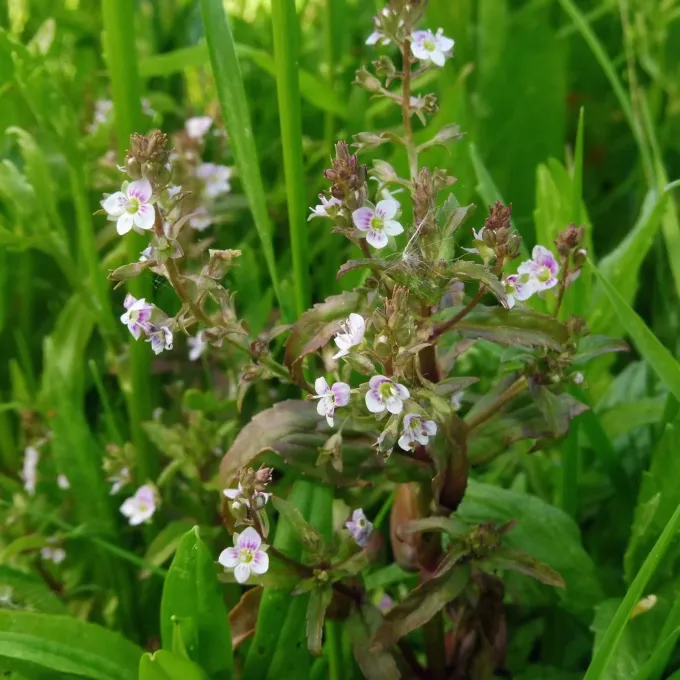
Description
Growing requirements
The Pink water speedwell (Veronica catenata) is a perennial herbaceous plant belonging to the Plantaginaceae family. It is typically found in wetlands, stream margins, and shallow water habitats.
Botanically, the species is recognized by its succulent-like stems and distinct lanceolate leaves. It exhibits a high degree of phenotypic plasticity, adapting its growth form depending on the water depth.
Regarding climatic requirements, it thrives in temperate zones. It needs consistent soil moisture and is highly intolerant of drought, which makes it an excellent indicator species for wetland health.
Soil preferences involve nutrient-rich, silt-based substrates. The plant prefers neutral to alkaline pH levels, which support the uptake of essential micronutrients from the aquatic sediment.
Agrotechnical maintenance focuses on preventing invasive species encroachment. As it occupies specific niches, managing the hydrological flow is the most critical factor for its survival.
Main diseases and pests
Fungal infections, particularly rust and mildew, pose the biggest threat to the health of the foliage. These are usually exacerbated by stagnant air and overcrowding of plants.
Invertebrate pests, including aphids and specialized beetle larvae, often feed on the tender tips of the stems, causing stunted growth and preventing the plant from setting seeds.
Root rot caused by stagnant water conditions can compromise the vascular system. If the water becomes anaerobic, the plant cannot uptake oxygen, leading to rapid decay.
Competition from aggressive semi-aquatic plants, such as reeds, often shadows the speedwell, leading to a reduction in its population density over several growing seasons.
Extreme weather events, such as heavy flooding that uproots the shallow rhizomes, can destroy entire colonies, highlighting the vulnerability of this species to habitat instability.