
Armstrong's Hebe
Veronica armstrongii
Description
Growing requirements
Veronica armstrongii, commonly known as Armstrong's Hebe, is a unique evergreen shrub belonging to the Plantaginaceae family. Originally native to the mountainous terrain of New Zealand, this plant has adapted to harsh environmental conditions, making it a distinct choice for ornamental gardening.
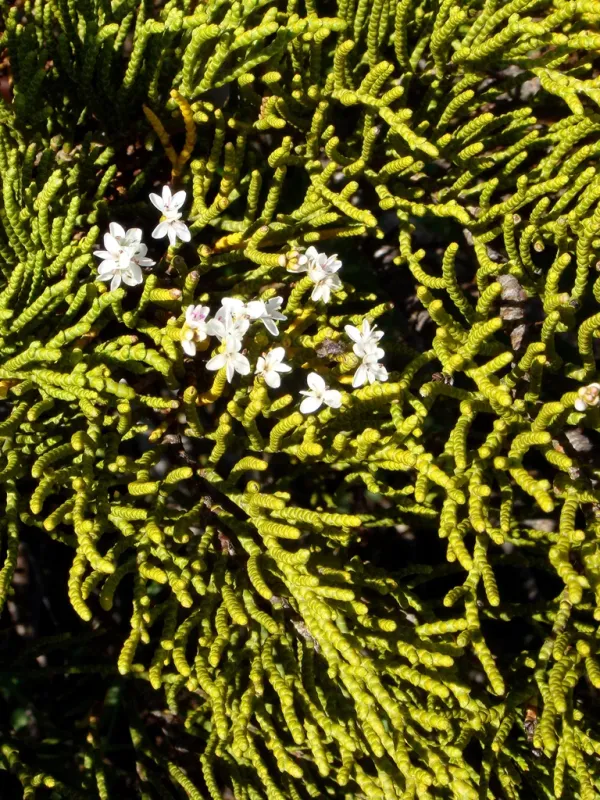
The plant is widely recognized for its whip-cord foliage, which gives it a striking resemblance to conifers. Its tiny, scale-like leaves are pressed tightly against the stems, forming a compact, dense, and rounded bush that maintains an olive-green color throughout the year.
Growing Armstrong's Hebe requires careful site selection. It thrives in well-drained, fertile soils with a neutral to slightly acidic pH. The plant is highly sensitive to waterlogged soil, which can lead to rapid root decay, so proper drainage is non-negotiable for its long-term survival.
In terms of climate, it performs best in regions with temperate maritime climates. While it can withstand moderate frosts, it requires protection from severe cold and drying winter winds, which can easily scorch the evergreen foliage and damage the delicate stems.
The plant is highly valued for its low-maintenance ornamental properties. It is an excellent choice for rock gardens, container planting, and formal low hedges, as its slow growth habit ensures that it retains its structural shape for many years with minimal pruning.
Main diseases and pests
The primary threats to Veronica armstrongii are fungal diseases triggered by high humidity and poor air circulation. Root rot is particularly dangerous, especially when the plant is grown in heavy, poorly drained clay soils that retain excessive moisture around the roots.
Leaf spot infections can also occur under damp conditions. These diseases often manifest as darkened lesions on the scale-like leaves. To mitigate this risk, gardeners should ensure the plant is spaced correctly and that the surrounding area is free of debris.
Common pests include scale insects and spider mites, which can infest the tight foliage. These pests often go unnoticed until significant damage, such as yellowing or thinning of the branches, becomes visible, necessitating prompt intervention.
Effective management includes the use of horticultural oils or systemic insecticides specifically labeled for ornamental shrubs. Regular monitoring of the foliage, especially during the peak growing season, is essential to catch infestations before they cause irreversible damage.
Proper sanitation is critical for disease control. Removing any dead or dying branches early in the season helps prevent the spread of fungal spores and encourages new, healthy growth that enhances the plant's natural resistance to environmental stress.