
American speedwell
Veronica americana
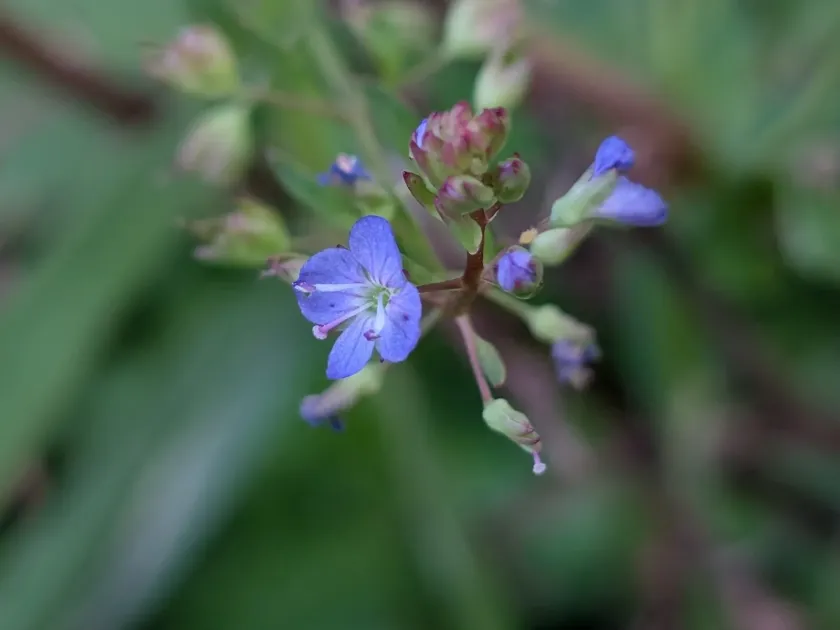
Description
Growing requirements
American speedwell (Veronica americana) is a perennial herbaceous plant belonging to the Plantaginaceae family. This species is primarily adapted to riparian habitats, frequently occurring in marshes, along stream banks, and in various wetlands throughout its native North American range.
The plant thrives in nutrient-rich, moist to saturated soil conditions. It prefers a neutral or slightly acidic substrate that allows for the proliferation of its shallow, fibrous root system. High organic content in the soil is essential for supporting the rapid vegetative growth observed during the spring and early summer months.
Regarding light requirements, Veronica americana performs best in partial shade to full sun, provided that moisture levels are consistently maintained. Exposure to excessive direct sunlight in arid conditions can induce significant stress, leading to premature wilting and decreased photosynthetic efficiency.
Climate suitability for this species is linked to its temperate origin, where it exhibits tolerance to cold winter temperatures. The plant is considered hardy; however, cultivation efforts should focus on stable environmental conditions to avoid physiological disturbances caused by sudden shifts in humidity or ambient temperature.
Effective agrotechnical practices for this crop include maintaining clean rows free of aggressive weeds, as the plant is not a strong competitor in its early development stages. Careful monitoring of water levels is the most critical factor in achieving high biomass yields, especially when grown in artificial wetland systems or controlled agricultural plots.
Main diseases and pests
The primary threats to Veronica americana are fungal pathogens such as downy mildew and leaf spot diseases, which typically emerge under conditions of poor air circulation and high humidity within the planting site. Managing plant density is crucial to minimizing these risks.
Insect pests, including aphids and leaf-chewing beetles, pose significant challenges to the integrity of the foliage. Integrated pest management strategies, emphasizing biological controls, are highly recommended to maintain the quality of the crop while ensuring long-term sustainability.