
Woolly plantain
Plantago tomentosa
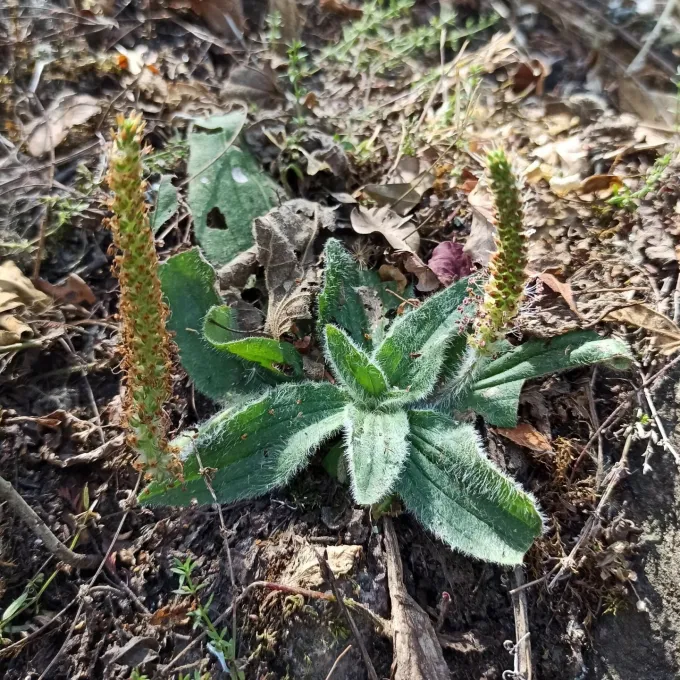
Description
Sowing dates
Sowing of woolly plantain (Plantago tomentosa) is primarily carried out in the spring, once the soil temperature reaches 10-12 degrees Celsius. It is crucial to ensure sufficient soil moisture in the seedbed to facilitate the germination of these small-sized seeds.
For commercial plantations, it is recommended to use row sowing with spacing between 30 and 45 centimeters. This layout facilitates mechanized soil maintenance, weed control, and efficient harvesting during subsequent growing seasons.
The sowing depth should not exceed 0.5 to 1 centimeter. Planting deeper than this significantly reduces germination energy, resulting in sparse seedlings and a reduction in the total yield of the medicinal raw material.
In regions characterized by prolonged and cold springs, late autumn sowing on frozen ground is permitted. This allows the seeds to undergo natural stratification, which ensures more uniform and vigorous seedling emergence as soon as the warmer days arrive.
Once seedlings emerge, thinning is a mandatory agronomic practice. The optimal distance between plants in a row should be 15 to 20 centimeters to provide each individual plant with sufficient space for growth and development.
Growing requirements
Woolly plantain belongs to the Plantaginaceae family and is a perennial herbaceous plant featuring distinct leaf pubescence, which gives it its specific name. The species is adapted to temperate climates and requires good sunlight exposure to accumulate active compounds.
The crop prefers light, well-drained sandy loam or loamy soils with a neutral or slightly acidic pH. Waterlogging is detrimental to the site, as it promotes root rot and can lead to the total failure of the plantation.
The plant has moderate water requirements, although it needs regular moisture during the phase of active leaf rosette formation. Mature plants are quite drought-tolerant due to the specific anatomical structure of their epidermis.
The foundation of effective cultivation is selecting open, wind-protected sites. The plant responds well to organic fertilizers applied during pre-sowing soil preparation, which ensures robust growth of the vegetative mass.
Avoiding high weed competition is critical for the normal development of the species. In the initial growth stages, the plant develops slowly, therefore requiring meticulous manual or mechanical weeding between rows.
Yield
The yield of woolly plantain depends on plant density, soil fertility levels, and the timeliness of fertilization. On average, if agronomic regulations are followed, one can obtain up to 10–15 centners of dry raw material per hectare.
The maximum leaf mass yield is observed in the second and third years of the plantation's life. In the first year, the plant directs most of its energy into root system development and forming a strong leaf rosette, limiting the harvest.
Productivity indicators are also closely linked to the harvesting stage. The highest concentration of biologically active compounds is accumulated during the full leaf deployment stage, right before active flower stalk formation.
Harvesting can be performed 2–3 times per season, provided that weather conditions allow the plant to recover quickly after cutting. After each harvest, the plantation requires irrigation and inter-row cultivation to stimulate new leaf growth.
To maintain high productivity for 4–5 years, it is necessary to implement annual autumn mulching and apply mineral fertilizers that compensate for the depletion of nutrients caused by biomass harvesting.
Main diseases and pests
The most common disease for this species is powdery mildew, which manifests as a white coating on the leaves. Control involves the use of fungicides during early stages and maintaining spatial isolation from infection sources.
Under waterlogged conditions, plantations are prone to grey mold, which causes rapid softening of the rosette tissues. The solution lies in improving drainage and preventing excessive density within the crop rows.
Among pests, wireworms can cause the most significant damage by attacking the root systems of young plants. Preventive methods, such as deep autumn plowing and strict crop rotation, are effective measures against them.
Defoliating insects, such as cutworms or meadow moths, may also cause damage, reducing the commercial quality of the raw material. In cases of mass infestation, biological pesticides that are safe for medicinal products are recommended.
Prevention of all pathologies is based on strict adherence to agronomic practices: avoiding water stagnation, regular aeration of the crop through thinning, and maintaining high fertility levels, which strengthens the plant's natural immune system.
Harvesting
Harvesting of woolly plantain is carried out in dry, sunny weather. It is important that the leaves are free of dew or rain moisture, as damp material spoils quickly and loses its medicinal properties during the drying process.
Leaves are cut manually or using specialized mowers at a height of 3-5 centimeters above the soil surface. It is essential not to damage the growth point in the center of the rosette to ensure rapid regrowth of new greenery.
Immediately after harvesting, the raw material is sent for drying. It is spread in thin layers in well-ventilated areas, under sheds, or in dryers at a temperature not exceeding 40–45 degrees Celsius to preserve the color and active components.
During drying, the raw material is periodically turned to prevent heating and uneven moisture loss. The final product is considered dry when the leaf petioles become brittle upon bending and the leaf blade crumbles easily.
Storage of the dried plantain is conducted in dry, dark, and well-ventilated warehouses using paper or cloth packaging. The shelf life of properly dried and stored medicinal raw material is typically up to two years without quality loss.