
Awl-leaved plantain
Plantago subulata
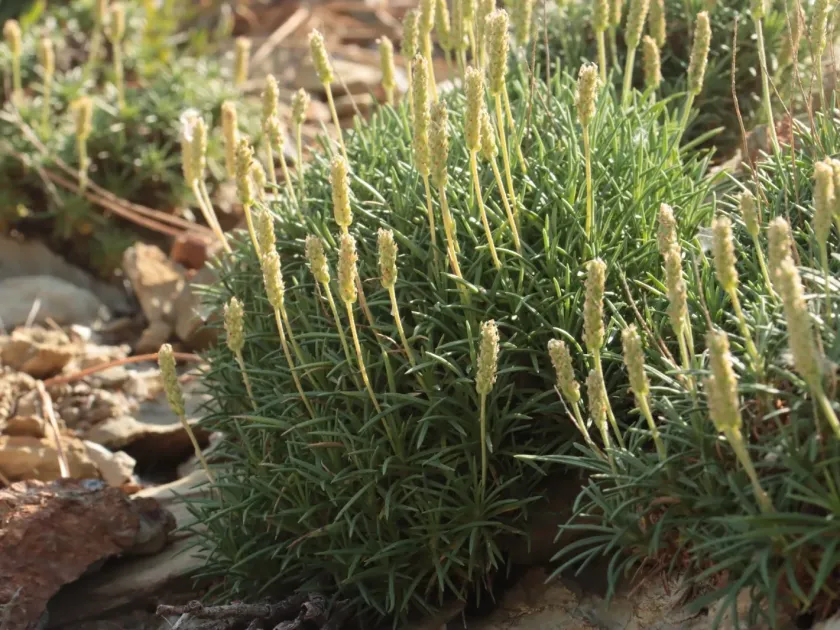
Description
Sowing dates
Sowing of Plantago subulata is typically carried out in the spring months once the threat of heavy frost has passed and the soil has reached an optimal temperature.
Due to the small size of the seeds, they should be sown on the surface of the growing medium and pressed gently into the soil rather than buried deep.
Cold stratification is highly recommended to improve germination rates, as the species has evolved to respond to seasonal changes in the Mediterranean environment.
Spacing should be managed according to the desired density of the groundcover, usually maintaining at least 15-20 centimeters between individual plants to ensure proper airflow.
Seedlings are slow to establish, which makes weed management in the first season a crucial activity for successful field or garden development.
Growing requirements
Awl-leaved plantain belongs to the Plantaginaceae family and is recognized for its distinctive, needle-like foliage that forms dense, attractive basal rosettes.
The plant originates from the Mediterranean region, where it is adapted to rocky soils, high solar radiation, and periods of seasonal drought.
It thrives in full sunlight and requires well-drained soil conditions to prevent the saturation of the root system, which is vital for the health of the perennial roots.
In terms of soil fertility, the species is remarkably undemanding and can survive in poor, sandy, or alkaline substrates where many other plants fail to thrive.
It has great potential for erosion control and dry landscaping, as its root system helps bind loose soil particles together in exposed environments.
Main diseases and pests
The primary threats to this plant are fungal infections related to high humidity levels and poor soil drainage, which often occur in non-native, wetter climates.
Pests such as spider mites and various aphids can infest the plants, particularly when they are experiencing drought stress or when planted in overly crowded conditions.
Management of these threats involves careful watering practices, ensuring that the soil surface is allowed to dry out between irrigation cycles.
Using cultural controls, such as regular thinning of planting areas, helps maintain the necessary airflow that inhibits the spread of fungal spores among the leaves.
Biological treatments are encouraged to manage infestations, ensuring that the ecological balance is maintained within the area where the plant is grown.