
Little plantain
Plantago pusilla
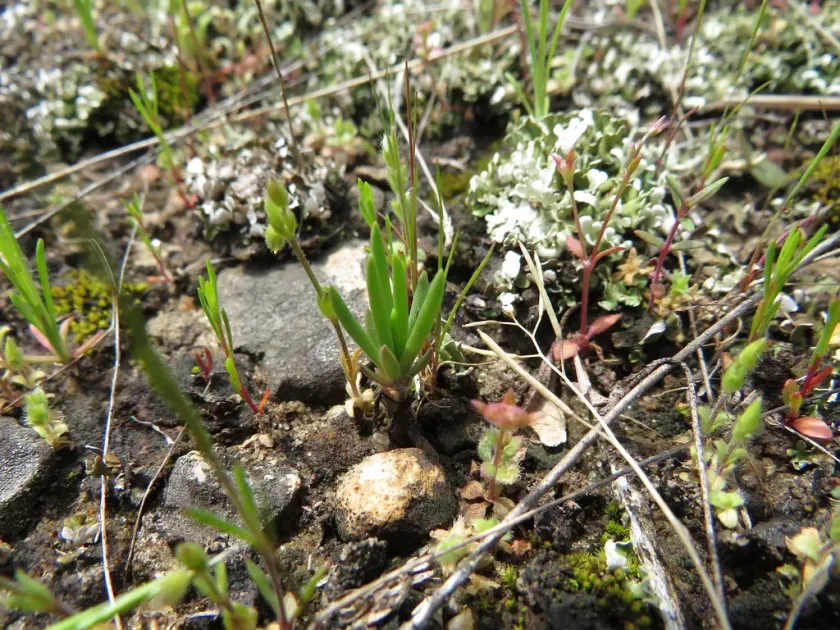
Description
Sowing dates
The Little plantain (Plantago pusilla) is an annual herb, requiring precise timing for sowing to ensure successful establishment. Early spring is the most suitable time, immediately after the danger of severe frost has passed and soil temperatures have reached approximately 10 degrees Celsius.
Due to the small size of the seeds, they should be sown shallowly, ideally not exceeding 0.5 to 1 centimeter in depth. Consistent soil moisture during the germination phase is essential for achieving a high percentage of seedling emergence.
Row planting with spacing around 25 centimeters is recommended to allow the rosette-forming leaves to develop fully without inter-plant competition. This layout also facilitates future mechanical weeding and other field operations.
Applying light soil compaction after sowing ensures optimal seed-to-soil contact. This practice helps to stabilize the seedbed and promotes efficient moisture absorption, which is critical during the delicate early stages of development.
In industrial settings, high-quality seed selection and calibration are crucial. Ensuring the seeds are free from impurities prevents the introduction of weeds, which could easily overpower the relatively slow-growing seedlings of the Little plantain.
Growing requirements
This crop thrives in well-drained, light-textured soils such as sandy or silty loams. Good aeration is vital to prevent root suffocation, which the species is sensitive to during periods of excessive rainfall or poor irrigation management.
Little plantain is a sun-loving plant that requires full exposure to solar radiation. Shaded environments inhibit the production of secondary metabolites and can lead to etiolated growth, significantly reducing the commercial quality of the biomass.
While the species is hardy, it requires a steady supply of moisture during the vegetative growth period to reach its maximum yield potential. However, it displays a level of tolerance to short-term dry spells once the root system is established.
Temperatures between 18 and 24 degrees Celsius are optimal for the healthy physiological function of the plant. Extremely high temperatures can induce premature flowering, which marks the end of the vegetative biomass accumulation phase.
A neutral soil pH range is ideal for nutrient uptake. If the site is acidic, amendment with lime prior to planting can drastically improve both the vigor of the plants and the overall productivity of the field.
Yield
The harvest yield of Little plantain is primarily measured in biomass, with well-managed crops producing between 1.5 and 2 tonnes per hectare. Yield is heavily dependent on sunlight availability and the management of water resources throughout the growing season.
The peak harvest time occurs during the flowering stage, as this is when the concentration of medicinal compounds in the leaves is highest. Harvesting at this specific developmental stage ensures high-quality raw material for pharmaceutical processing.
Seed production yields generally range from 300 to 500 kilograms per hectare under favorable conditions. Harvesting must be timed precisely when the seed heads reach maturity to prevent natural shattering and significant field losses.
After harvesting, rapid drying is essential to prevent fungal growth or nutrient degradation. Proper storage conditions are also vital to maintain the integrity of the harvested material before it reaches the final processor.
Regular monitoring of field fertility allows for targeted fertilization, which is the most effective way to maintain consistent yields year after year. Rotation with legumes can further enhance soil health for subsequent plantain crops.
Main diseases and pests
Powdery mildew represents the most significant fungal threat to the species, particularly in regions with high humidity and poor air circulation. Effective control measures include spacing and the strategic application of fungicides.
Insects like aphids and leaf-eating caterpillars can cause considerable damage to the foliage. If left unchecked, these pests can reduce the plant's photosynthetic capacity, thereby stunting development and reducing final crop quality.
Root rot diseases are primarily associated with waterlogged conditions. Proper field drainage and avoiding over-irrigation are the most effective management strategies to prevent these soil-borne pathogens from compromising the stand.
Weed management remains the most challenging aspect of cultivation, especially during the early seedling stage. Integrated pest management, including mechanical weeding and the use of approved herbicides, is recommended for long-term control.
Field observation should be conducted regularly to identify early symptoms of disease or pest infestation. Early detection allows for localized intervention, preventing the spread of threats across the entire planting area.