
Loefling's plantain
Plantago loeflingii
Description
Growing requirements
Loefling's plantain (Plantago loeflingii) is a member of the Plantaginaceae family. It is an annual herbaceous plant native to the Mediterranean basin, where it thrives in natural grassland habitats and rocky terrains.
The plant demonstrates a strong preference for well-drained, sandy, or gravelly soils. It is well-adapted to nutrient-poor substrates, which allows it to colonize areas where many other agricultural crops fail to establish successfully.
Climate adaptation is a key feature of this species; it prefers mild winters and dry, warm springs. It is highly resistant to water stress, functioning effectively as a xerophyte in its native ecological zones.
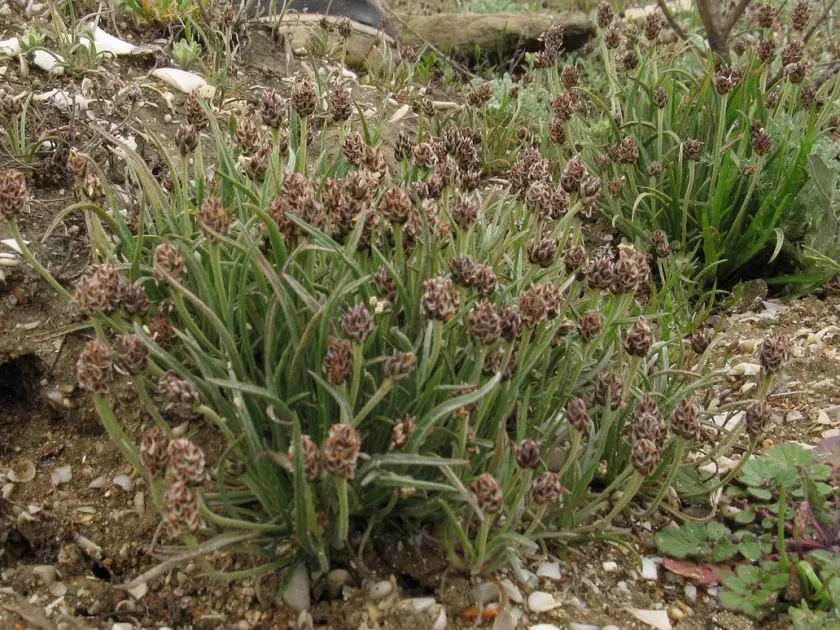
Botanically, it is characterized by narrow, sometimes linear leaves and small, dense inflorescences. The plant completes its life cycle within a single growing season, focusing resources on rapid seed production before the peak of summer heat.
Its agricultural utility is mainly focused on soil stabilization and range management. It contributes to the biodiversity of natural pastures, providing ground cover that prevents erosion on slopes and arid fields.
Main diseases and pests
The most significant threat to plant health is fungal decay of the root system caused by poor soil drainage. Maintaining proper site conditions with adequate aeration is crucial for preventing infection in commercial or experimental patches.
Pests typically include seed-eating insects that target the developing spikes. While major outbreaks are rare, monitoring the maturation phase is recommended to ensure high seed quality and future viability of the population.