
Heart-leaved globe daisy
Globularia cordifolia
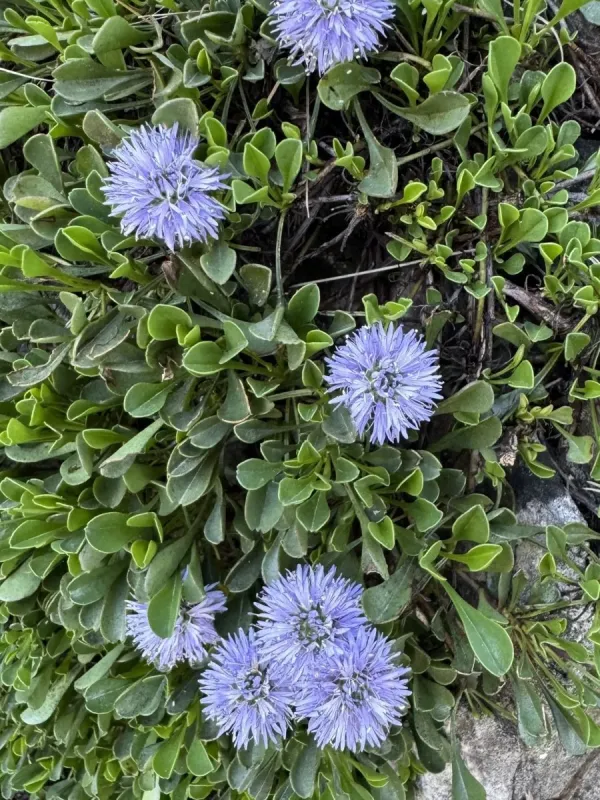
Description
Growing requirements
Heart-leaved globe daisy (Globularia cordifolia) is a perennial subshrub belonging to the Plantaginaceae family. It is native to the mountain ranges of Southern and Central Europe, where it thrives in rocky habitats and alpine meadows.
The plant is characterized by its prostrate growth habit, forming dense, low-growing mats of woody stems. Its evergreen leaves are small, leathery, and heart-shaped at the tips, which gives the plant its distinctive appearance and makes it popular for year-round ground cover.
Successful cultivation requires soil conditions that mimic its natural alpine environment. The substrate must be gritty, well-draining, and ideally alkaline or neutral in pH. Poor drainage is the primary cause of failure, as the root system is prone to rot in waterlogged conditions.
The plant has specific lighting requirements, favoring full sun exposure. While it is hardy in colder climates, it benefits from protection against excessive winter moisture, which can damage the evergreen foliage and lead to fungal outbreaks during mild, damp winters.
In landscaping, this species is highly valued for rock gardens and crevice plantings. Its ability to spread slowly while maintaining a tidy structure makes it an excellent choice for stabilizing rocky slopes or creating decorative accents in alpine-style gardens.