
Antirrhinum hybrids
Antirrhinum hybrids
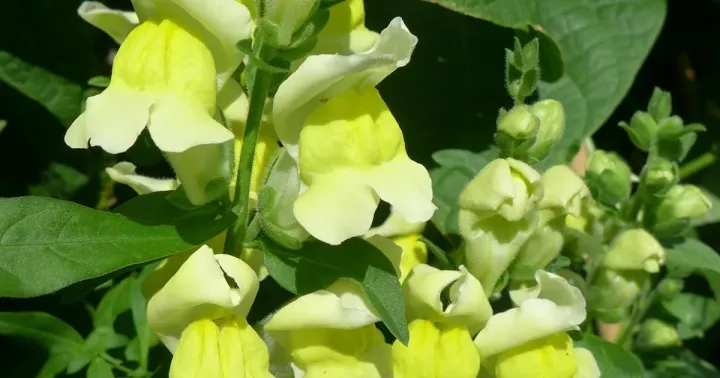
Description
Sowing dates
Sowing Antirrhinum hybrids indoors typically begins in late February or early March. Since the seeds are extremely small, they should be surface-sown on a moist substrate and not buried deep, or only lightly covered with vermiculite.
Optimal germination requires a stable temperature range of 20–23 degrees Celsius and high ambient humidity. Seedlings usually emerge within 10–14 days, after which temperatures should be reduced to prevent the seedlings from becoming leggy.
Pricking out should occur once the first pair of true leaves has developed, transferring the seedlings into individual pots or cell trays. Transplanting into the open field is performed after the danger of late frosts has passed, generally in mid-May.
In commercial cultivation for cut flowers, planting densities range from 15x20 to 25x30 centimeters, depending on the growth habit of the specific hybrid. Proper spacing is essential to ensure consistent stem quality and overall height.
Modern hybrids are bred for uniformity, which allows for simultaneous harvesting. This is a critical factor for professional growers aiming to maximize efficiency and maintain high quality standards for market delivery.
Growing requirements
Antirrhinum hybrids belong to the Plantaginaceae family and are highly light-demanding plants. They require a sunny, well-ventilated location to achieve peak blooming performance and prevent weak, etiolated growth.
The crop performs best in fertile, well-draining loam or sandy soil with a neutral pH level. Proper soil structure is vital, as the root system is highly sensitive to waterlogging and poor oxygenation.
While the plants are relatively cold-hardy and can withstand brief temperatures down to -3 degrees Celsius, they thrive in temperatures between 18 and 22 degrees. Maintaining moderate temperatures during the growth cycle ensures robust stalks.
Watering must be regular, particularly during dry spells, to maintain flower quality. However, excessive moisture must be avoided to prevent root rot, which is a common physiological issue in this species when grown in heavy soils.
To ensure vigorous growth and abundant blooms, balanced fertilization with an emphasis on phosphorus and potassium is recommended. Excessive nitrogen leads to excessive vegetative growth and a significant reduction in flower durability.
Main diseases and pests
Rust is the most significant disease for snapdragons, characterized by orange-brown pustules on the undersides of leaves. It spreads rapidly under humid conditions and can destroy entire batches if not managed promptly.
Damping-off (black leg) is a common threat during the seedling stage. Prevention depends on using sanitized growing media, avoiding overwatering, and maintaining excellent airflow around the young plants.
Aphids and spider mites are the primary pests affecting this crop. They extract plant sap and are frequently responsible for the transmission of viral pathogens, including the snapdragon mosaic virus, which stunts plant growth.
Fusarium wilt is another serious fungal threat that attacks the vascular system, leading to rapid wilting of the plant. High soil temperatures combined with excessive moisture create the ideal environment for this pathogen.
Effective management requires integrated pest management practices, including the use of systemic fungicides and insecticides, alongside rigorous sanitation protocols to prevent the build-up of pathogen populations.
Harvesting
Antirrhinum hybrids are primarily harvested for the cut flower market. Harvesting occurs when 1/3 to 1/2 of the florets on the spike are open, ensuring a vase life of approximately 10–14 days for the consumer.
Harvesting should ideally be done in the early morning or late evening when the plant's turgor pressure is highest. Stems must be immediately placed in clean, cool water to maintain freshness.
In landscape design, snapdragons are prized for their long blooming window, which lasts from early summer until the first frost. Deadheading is recommended to maintain a tidy appearance and stimulate the development of secondary spikes.
The availability of various hybrid series allows for a wide range of heights, from compact bedding types to tall, sturdy varieties suited for back-of-border arrangements and professional greenhouse production.
Careful post-harvest handling and controlled transport conditions are essential to preserve the structural integrity of the spikes and ensure the product reaches the marketplace in pristine condition.