
Microspora
Microspora
Microspora is a genus of filamentous green algae classified within the family Microsporaceae. While not a cultivated crop, these algae are frequently found in freshwater environments, including irrigation ditches and agricultural reservoirs, where they form dense mats.
What the section contains
Microspora
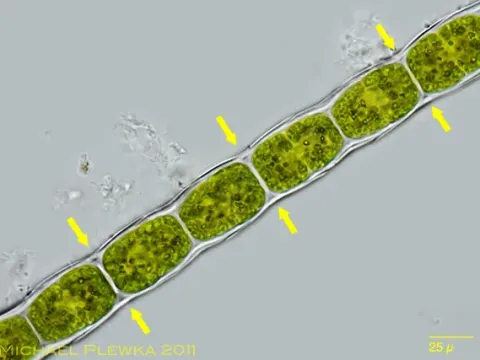
The morphology of Microspora is distinct due to its unbranched filaments composed of cylindrical cells. The cell walls are characteristically composed of two H-shaped sections, which overlap in the middle, a feature that distinguishes them from other green filamentous algae.
These algae require stagnant or slow-moving freshwater bodies to thrive. They are often found in nutrient-rich waters where nitrogen and phosphorus levels are elevated, which often occurs due to runoff from nearby agricultural fields or fertilizer application.
Regarding environmental conditions, Microspora prefers temperate climates. They are typically most abundant in spring and autumn, as they can tolerate cooler water temperatures that would inhibit the growth of many other algal species found in similar habitats.
In terms of ecological significance, Microspora can affect agricultural water management. Excessive growth can lead to the clogging of irrigation pipes and filtration systems, necessitating regular maintenance of water storage facilities to ensure consistent flow for crop hydration.