
Hildenbrandia
Hildenbrandia
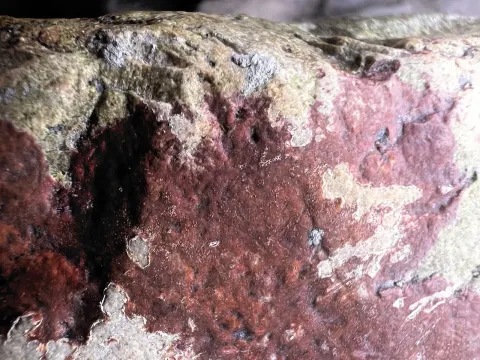
Hildenbrandia is a genus of red algae belonging to the family Hildenbrandiaceae. It is widely recognized for its crust-like appearance, forming durable, deep-red coatings on rocky surfaces in both marine and freshwater environments.
What the section contains

Hildenbrandia
The genus has a cosmopolitan distribution, thriving in various climatic zones. Its ability to adhere to rocks makes it a resilient inhabitant of tidal zones, riverbeds, and even deep-water environments where light penetration is limited.
Morphologically, Hildenbrandia is characterized by a thallus that consists of tightly packed filaments. This structure provides it with significant mechanical stability against strong water currents and wave action in intertidal zones.
Requirements for its growth include high water purity and constant circulation. Unlike higher plants, it relies on dissolved nutrients and minerals found in the water column to maintain its physiological processes.
Climate adaptation is a key feature of the species, as it is found in both arctic and temperate regions. It is highly resistant to low water temperatures, although it requires stable environmental conditions to prevent the loss of pigmentation.
The most significant threat to Hildenbrandia populations is aquatic pollution. As a sensitive organism, it fails to thrive in water with high levels of organic waste or heavy metals, which disrupt its cellular membrane functions.
Eutrophication is another major threat. Increased levels of nitrogen and phosphorus in the water encourage the growth of invasive, fast-growing algae that compete for space and block necessary light exposure for Hildenbrandia.
Physical habitat loss, caused by coastal infrastructure development or heavy dredging, poses a severe risk. Once the hard substrate is removed or disturbed, the colony is incapable of re-establishing itself in that area.
Biological threats include overgrazing by marine invertebrates. Specific mollusks can consume large portions of the thallus, leading to a decline in colony density and reproductive potential within the ecosystem.
Pathogenic outbreaks, often triggered by stagnant water and localized increases in temperature, can lead to bleaching and decay. These diseases are usually indicators that the aquatic system is losing its natural balance.