
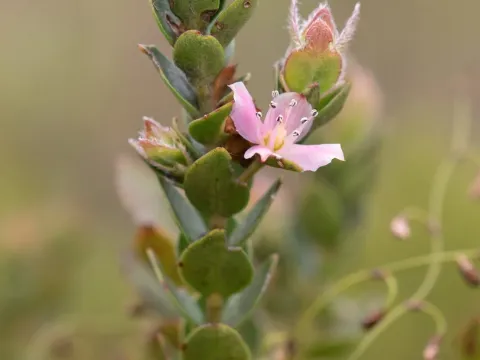
Geissoloma
Geissoloma
Geissoloma is a monotypic genus of flowering plants belonging to the family Geissolomataceae. The plant is a small, evergreen shrub that is endemic to a very restricted area within the Western Cape province of South Africa.
What the section contains

Geissoloma
The species grows primarily in the unique fynbos biome, which is characterized by nutrient-poor, acidic, and well-drained sandy soils. It is well-adapted to the Mediterranean climate of the region, featuring cool, wet winters and warm, dry summers.
Botanically, Geissoloma is distinguished by its opposite, leathery leaves and small, distinctively structured flowers. It is considered a primitive member of the order Crossosomatales, making it a subject of significant interest in evolutionary biology.
There is no commercial agricultural usage for this plant, as it does not produce edible crops, fiber, or medicinal compounds of industrial scale. It remains primarily of scientific interest for conservationists and botanical enthusiasts who specialize in rare endemics.
Cultivation of Geissoloma is extremely challenging due to its dependence on the specific mycorrhizal fungi present in its native soil environment. Maintaining the plant requires precise control over pH levels and water drainage to simulate the natural conditions of the Cape floral kingdom.