
Strawberry clover
Trifolium fragiferum L.
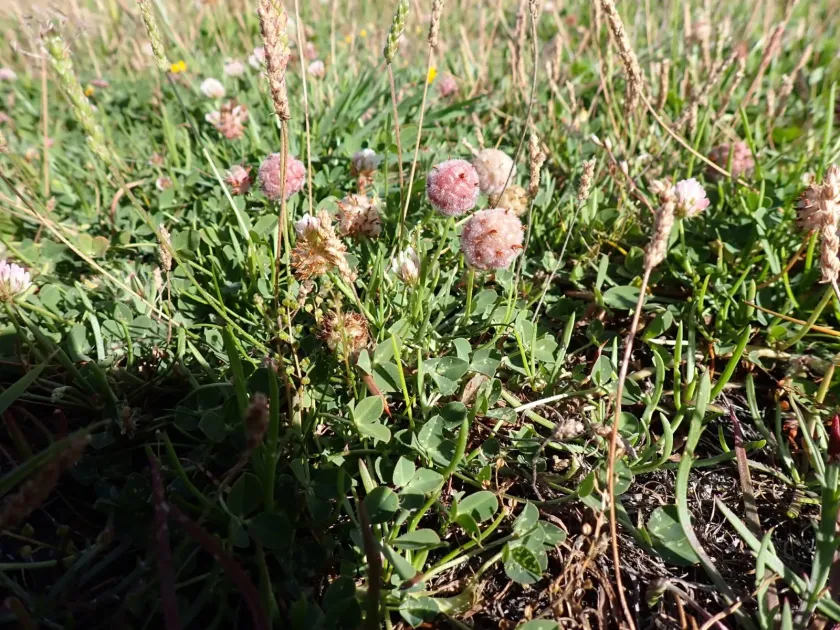
Description
Sowing dates
Strawberry clover is typically sown in early spring when soil temperatures reach the minimum levels for germination. Careful seedbed preparation is vital due to the very small size of the seeds.
The recommended seeding rate is approximately 10 to 12 kilograms per hectare in pure stands. When incorporating the plant into pasture mixtures, the rate should be adjusted based on the specific composition of the companion grasses.
Seeds should be placed no deeper than 1 to 2 centimeters to ensure successful emergence. Using a roller after sowing is highly recommended to improve soil-to-seed contact and moisture retention.
Because the seeds are small, shallow sowing is critical to prevent the exhaustion of nutrient reserves within the seedling before it reaches the surface and establishes photosynthesis.
Spring sowing is preferred in most climates to allow the root system to establish itself before the onset of summer heat and potential moisture stress.
Growing requirements
Strawberry clover belongs to the Fabaceae family and is recognized for its creeping, stoloniferous growth habit. It is native to temperate regions of Europe, Asia, and North Africa.
This species is exceptionally well-adapted to saline soils, making it an excellent candidate for reclaiming marginal land. It performs well in heavy clay soils that are prone to seasonal waterlogging.
It is highly resistant to heavy grazing and trampling, which makes it an ideal component for permanent pastures where livestock density is high throughout the season.
The plant thrives in moist environments but maintains a good level of drought tolerance once established. Its ability to fix atmospheric nitrogen makes it a valuable sustainable component of agricultural systems.
Unlike some other clovers, it prefers high-light conditions and does not compete well in highly shaded areas, requiring open pasture management to maintain its density and vigor.
Main diseases and pests
Anthracnose can affect plant health under humid and warm conditions. Proper pasture management and avoiding excessive irrigation can reduce the risk of this fungal pathogen.
Rust diseases are common in dense stands. Ensuring adequate ventilation through rotational grazing and avoiding overly dense canopy development are essential preventative practices.
Nodule weevils are the most frequent insect threats, primarily feeding on the leaves and damaging the root systems, which can reduce the nitrogen-fixing efficiency of the plant.
Clover seed chalcids can severely impact seed yield. Farmers focusing on seed production must implement monitoring protocols during the flowering stage to manage pest outbreaks.
Good soil drainage management and keeping the plant in a vigorous state are the best natural defenses against most diseases, as healthy plants are more resilient to pathogen invasion.