
Plukenetia conophora
Plukenetia conophora
Description
Sowing dates
Plukenetia conophora, commonly known as the Nigerian walnut, is a perennial vine belonging to the Euphorbiaceae family. In its native tropical habitat, propagation is primarily carried out via seeds sown at the onset of the rainy season to ensure optimal germination.
Successful germination requires high humidity and stable temperatures ranging between 25 and 30 degrees Celsius. Seeds are typically planted at a depth of 3 to 5 centimeters, and it is crucial to ensure adequate soil drainage to prevent seed rot in the moist tropical substrate.
The planting pattern must account for the vine's vigorous growth, which necessitates robust supports. In commercial farming, plants are set in rows with a spacing of at least 2 to 3 meters between individuals to facilitate sunlight penetration and free air circulation.
In nursery settings, seedlings are often raised in containers until they reach a height of 30–40 centimeters before being transplanted. This approach reduces losses from weeds and enhances the establishment rate of the crop under field conditions.
Frequent nitrogen-based fertilization during the initial months promotes rapid vegetative growth. As the plant matures, the nutritional requirements shift toward phosphorus and potassium to support the development of fruit and high oil content in the seeds.
Growing requirements
As a typical forest-dwelling vine, Plukenetia conophora is native to the humid tropical regions of West and Central Africa. The plant is highly sensitive to frost and extended dry spells, demanding consistent moisture levels throughout its entire growth cycle.
The species thrives in deep, fertile, humus-rich loamy soils with excellent water permeability. Cultivation in heavy clay soils without adequate soil amendment often leads to waterlogging and subsequent root decay due to fungal pathogens.
Soil pH for optimal development should fall within the slightly acidic to neutral range, specifically between 5.5 and 7.0. Soils with higher acidity levels may require lime treatment prior to planting to ensure proper nutrient uptake.
While juvenile plants prefer partial shade, mature vines require intense solar radiation for fruit maturation. Excessive shading can cause the plant to become leggy and results in a significant reduction in total annual fruit yield.
Agronomic management should include mulching around the base of the plant with organic residues. This practice helps maintain soil moisture levels and effectively suppresses the growth of weeds that compete with the vines for essential nutrients.
Yield
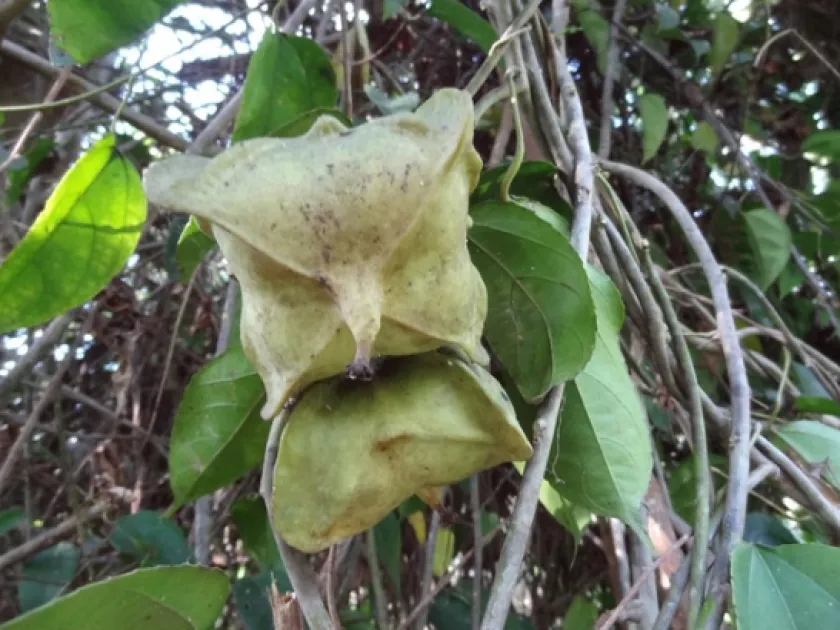
The fruits are large capsules containing seeds that are exceptionally rich in high-quality vegetable oil. Total yield is directly dependent on the provision of sturdy climbing supports and diligent maintenance of the vines, which can grow to significant lengths.
Average yield per hectare varies based on plant density and the age of the plantation. Mature vines are capable of producing several kilograms of seeds per season, provided they are maintained properly and protected from physical damage.
The active fruiting period for the Nigerian walnut begins between the second and third year post-planting. Yield potential may gradually decline as the plant ages, necessitating periodic plantation renewal by interplanting younger seedlings.
The oil extracted from the seeds is highly valued for its significant content of unsaturated fatty acids, making the crop a promising commodity for both the food and cosmetic industries. Seeds also contain significant protein, enhancing their nutritional profile.
Harvest efficiency relies heavily on the maturity level of the fruits, as premature harvesting leads to lower oil yield, whereas over-ripening results in the pods splitting and seeds dropping onto the ground.
Main diseases and pests
The primary threats to Plukenetia conophora are fungal diseases affecting the root system, particularly in poorly drained soils with stagnant air. Root rot can lead to rapid wilting and the total collapse of the plant within a short timeframe.
Pests such as aphids and spider mites frequently infest young leaves and tender shoots, extracting sap and weakening the vine. Regular monitoring of the leaf undersides allows for early detection and targeted intervention before infestations spread.
Certain insects may also bore into the fruit capsules, compromising the quality of the harvested seeds. Using biological control methods to manage pest populations is strongly recommended to maintain the ecological integrity and organic status of the product.
Viral infections, often spread by insect vectors, can manifest as leaf mosaic patterns and stunted growth. The removal and destruction of infected individuals serve as the only effective method to prevent the spread of disease within the plantation.
Preventative management, including strict adherence to crop rotation and avoiding overly dense planting, is vital. Good canopy aeration is a fundamental requirement for maintaining the long-term health and productivity of this crop.
Harvesting
Harvesting Plukenetia conophora is labor-intensive, as the pods do not ripen uniformly across the vine. Experienced farmers employ selective harvesting, picking individual pods as they transition to their characteristic brown color.
Pods are harvested manually using sharp garden shears to avoid damaging the brittle stems of the vine. Careful handling is necessary to ensure that the primary fruiting branches remain intact for the following production cycle.
After collection, the capsules must be dried in well-ventilated areas or under covered shelters protected from direct sun and rainfall. Thorough drying is essential to prevent mold development during the storage of the seeds.
Once sufficiently dry, the capsules naturally split open, allowing for the easy extraction of the seeds. Extra care should be taken during cleaning to avoid damaging the seed coat, which protects the high-value oil content.
Storage of cleaned seeds should occur in a cool, dry place using airtight containers. Adherence to these protocols prevents fat oxidation and preserves the chemical properties of the raw material for future industrial processing.