
Portland spurge
Euphorbia portlandica
Description
Growing requirements
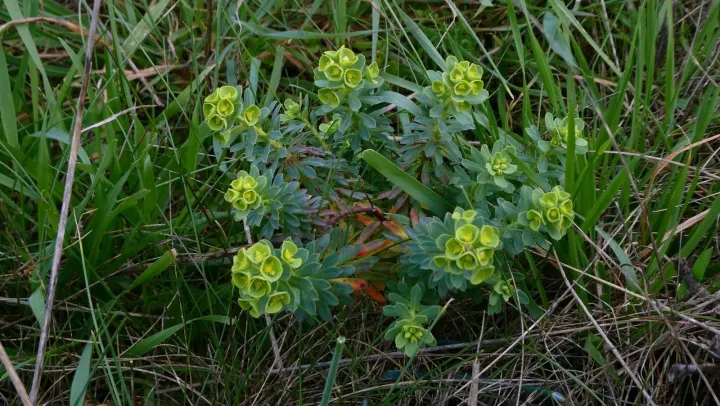
Portland spurge (Euphorbia portlandica) is a perennial herbaceous plant belonging to the Euphorbiaceae family. It is distinctively adapted to maritime environments, characterized by sandy soils and exposure to strong saline winds.
The native range of this species primarily includes the coastal regions of Western Europe. It is commonly found in sand dunes and rocky cliffs, where natural drainage is exceptionally high and nutrient availability is limited.
Botanically, the plant is recognized by its succulent-like stems and narrow leaves, which are adaptations to arid coastal conditions. It functions as a facultative halophyte, meaning it can tolerate salinity levels that would be detrimental to many conventional crops.
Climate requirements include plenty of sunlight and well-aerated, loose soils. The species thrives in regions where the risk of deep frost is minimal, as severe freezing temperatures can damage its succulent tissues.
Agronomic management must prioritize soil aeration. Any technique that compacts the soil or retains water for extended periods is counterproductive, as the root system lacks tolerance for anaerobic conditions and damp environments.
Main diseases and pests
Pathogenic threats are dominated by fungal diseases, particularly those that target the root system. Over-watering is the primary cause of decline, allowing pathogens such as Fusarium to compromise the integrity of the plant's vascular system.
Insect pests often include aphids and spider mites. These pests typically congregate on the younger, tender parts of the plant, extracting vital fluids and potentially serving as vectors for viral pathogens that cause leaf curling.
Powdery mildew represents a significant risk if the cultivation environment lacks proper air circulation. The white fungal growth on the leaves inhibits photosynthesis, leading to reduced vitality and poor overall development of the plant.
In greenhouses or nurseries, mealybugs are notorious for hiding in the crevices of the stem joints. They are difficult to eliminate due to their waxy protective coating, which shields them from many contact-based pesticides.
Integrated pest management (IPM) is highly recommended. This involves monitoring the humidity levels, maintaining adequate spacing between individual plants to promote airflow, and using targeted biological agents if an infestation occurs.