
Nice Spurge
Euphorbia nicaeensis
Description
Growing requirements
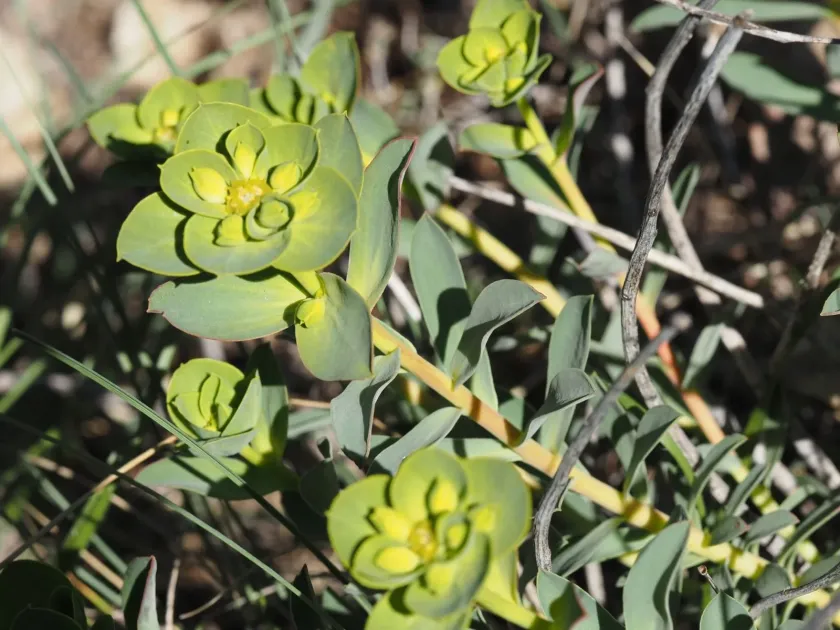
Nice Spurge (Euphorbia nicaeensis) is a perennial herbaceous plant belonging to the Euphorbiaceae family. It is widely recognized for its bluish-green foliage and structural presence in arid landscapes.
Originating from the Mediterranean region, this species is naturally adapted to rocky slopes and dry grasslands. It thrives in environments where other decorative plants might struggle due to lack of moisture.
Soil requirements for this plant are centered on excellent drainage. It performs best in sandy or gravelly soils with a neutral to slightly alkaline reaction, ensuring root health throughout the season.
Climate preference is strictly geared toward sun-drenched locations. It is highly resistant to heat waves and possesses a deep root system that allows it to survive extended periods of low rainfall.
Economically, it serves as an excellent candidate for xeriscaping and ecological restoration projects on poor or degraded soils, promoting biodiversity in reclaimed areas.
Main diseases and pests
The primary threat to the health of Nice Spurge is fungal infection triggered by poor drainage or excessive humidity in the root zone.
Pests such as aphids are commonly observed during the spring growth phase, potentially hindering the development of the flowering spikes.
Spider mites represent a secondary threat, particularly in hot and stagnant air conditions, which requires diligent monitoring of the leaves.
Root rot is considered the most critical risk factor; it is almost always linked to incorrect watering practices or heavy, clay-rich soil composition.
Gardeners should handle the plant with care, as the milky sap (latex) contained within the stems is toxic and can cause significant skin irritation upon contact.