
Oleander spurge
Euphorbia neriifolia
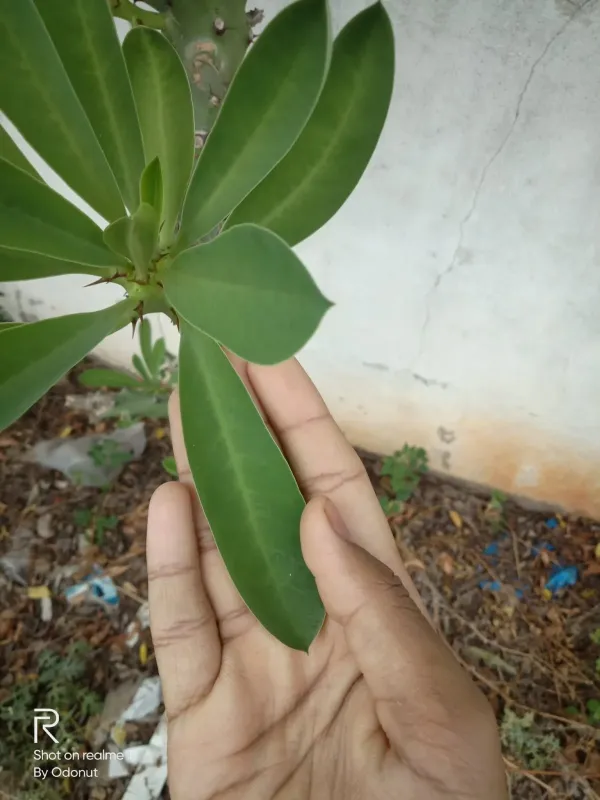
Description
Growing requirements
The Oleander spurge (Euphorbia neriifolia) is a prominent succulent shrub belonging to the Euphorbiaceae family. Originating from the rocky regions of India, it has adapted to thrive in harsh, semi-arid environments.
Botanically, it is characterized by its thick, succulent stems with distinct ribs and spines. The leaves typically appear during the rainy season and drop off when moisture becomes scarce, allowing the plant to photosynthesize via its stems.
Climate requirements involve full sun exposure and warm temperatures throughout the year. It does not tolerate frost, making it suitable for cultivation primarily in tropical and subtropical regions or greenhouses.
Soil conditions must prioritize excellent drainage to ensure the root system does not remain saturated. A mix of sand, perlite, and organic matter is recommended to mimic its natural, well-draining habitat.
Host utility of this plant is diverse, ranging from ornamental landscaping for xeriscaping projects to its historical application in traditional medicine and live fencing in rural areas.
Main diseases and pests
The most significant threat to Euphorbia neriifolia is root rot, triggered by overwatering or poor soil drainage. This condition can rapidly destroy the plant if not addressed early.
Pests such as mealybugs and spider mites are frequent invaders. They feed on the succulent tissues, weakening the plant and making it susceptible to secondary bacterial or fungal infections.
Management involves using systemic insecticides or manual removal of the affected parts. Due to the caustic white sap, it is essential to wear protective eyewear and gloves during any maintenance work.
Providing optimal spacing and adequate airflow around the plants helps prevent the accumulation of moisture, which is the main catalyst for most diseases affecting this species.
Regular monitoring of the stem bases and the undersides of the leaves is the best practice for early detection of pest infestations, ensuring the longevity and health of the ornamental shrub.