
Big Horned Euphorbia
Euphorbia grandicornis
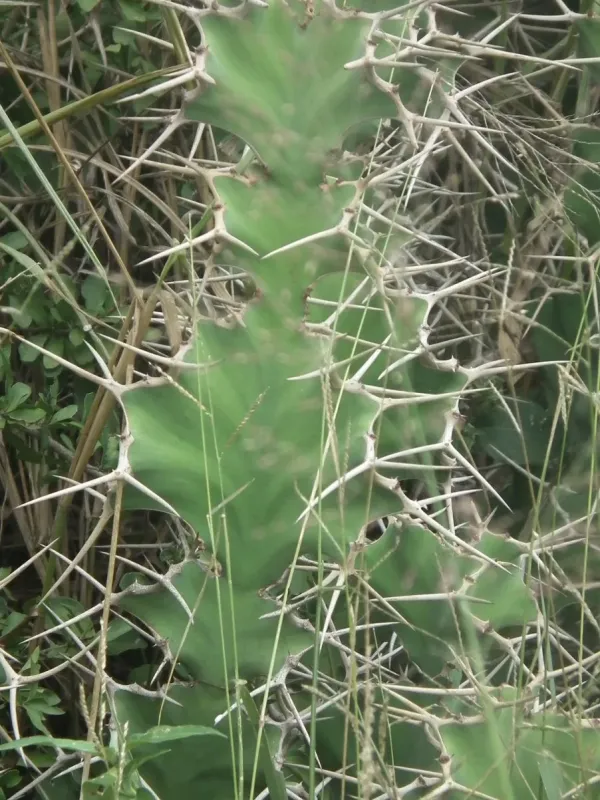
Description
Growing requirements
Euphorbia grandicornis, commonly known as the Big Horned Euphorbia, is a striking succulent belonging to the Euphorbiaceae family. Native to the arid regions of Southern Africa, it is highly valued for its architecturally impressive, thorny stems that resemble long horns.
The plant thrives in bright, direct sunlight. In an indoor setting, it requires a southern-facing window exposure. Insufficient light levels lead to etiolation, where the stems become thin, pale, and lose their characteristic robust appearance and sharp defensive spines.
A well-draining substrate is mandatory for this species. A standard commercial cactus mix enriched with additional pumice or coarse horticultural sand provides the aeration necessary to prevent the root system from suffocating or developing rot during dormant phases.
Watering practices must follow the cycle of the seasons. During the active growing period from spring through summer, provide water only when the soil has completely dried out. During the winter, the plant enters a period of dormancy and should be kept almost entirely dry.
Due to its slow growth rate, repotting is infrequent. It is best to use heavy pots that provide stability, as the plant can become top-heavy as it matures. During repotting, one must wear heavy-duty gloves to handle the spines and avoid contact with the toxic latex sap.
Main diseases and pests
Root rot is the most significant threat to the health of Euphorbia grandicornis. This condition is almost exclusively caused by overwatering or using soil mixtures that retain too much moisture, creating an environment favorable for fungal proliferation.
Common succulent pests such as mealybugs and spider mites are frequent invaders. Mealybugs often hide in the deep crevices between the stems and underneath the base of the thorns, making them difficult to detect and eradicate without thorough inspection.
If an infestation occurs, manual removal with an alcohol-soaked cotton swab is effective for minor cases. For larger outbreaks, systemic insecticides are recommended to ensure that the chemical reaches the protected areas deep within the stems.
The milky sap (latex) contained within the plant is a potent irritant. It is essential to keep the plant away from children and pets. If the skin is exposed to the sap, it should be washed immediately with soap and water to prevent dermatitis or chemical burns.
To prevent fungal and bacterial infections, ensure that the plant is kept in an area with good air circulation. If a branch begins to rot, it should be excised immediately using a sterilized blade, and the wound should be dusted with powdered charcoal to encourage drying.