
Palla Euphorbia
Euphorbia ferox
Description
Growing requirements
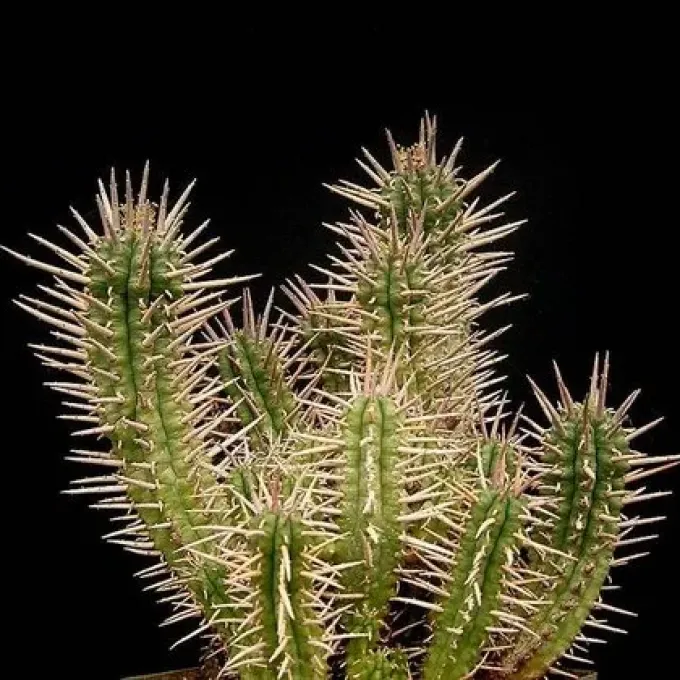
Euphorbia ferox is a distinct succulent belonging to the Euphorbiaceae family, widely recognized for its clustering habit and spiny, ribbed stems. This species is often sought after by collectors for its architectural form and adaptive nature to arid environments.
Native to South Africa, it thrives in regions with poor soil quality and high sunlight exposure. Its biological structure allows it to undergo crassulacean acid metabolism (CAM), which significantly improves its water-use efficiency during prolonged dry spells.
When cultivating this species, growers must prioritize soil aeration. A commercial succulent mix amended with coarse grit or perlite is essential to ensure that water drains rapidly, mimicking the rocky substrates of its natural South African habitat.
The plant demands full sunlight to maintain its structural integrity. In an indoor or greenhouse setting, providing at least six to eight hours of direct light daily is crucial. Without sufficient light, the plant will become etiolated, losing its characteristic compact appearance.
Temperature management is a key aspect of successful husbandry. Euphorbia ferox can handle heat well, but it should be protected from freezing conditions. During the winter dormancy phase, keeping the plant cool and dry will encourage healthy flowering and growth the following spring.
Main diseases and pests
The primary threats include root rot caused by overwatering and fungal infections that manifest as soft, dark spots on the stems. Proper hygiene and avoidance of overhead watering are the most effective preventative measures.
Insect pests, specifically mealybugs and aphids, often target the tender new growth at the apex of the stems. Utilizing systemic insecticides or insecticidal soaps is usually effective for controlling localized infestations.