
Beirut spurge
Euphorbia berythea
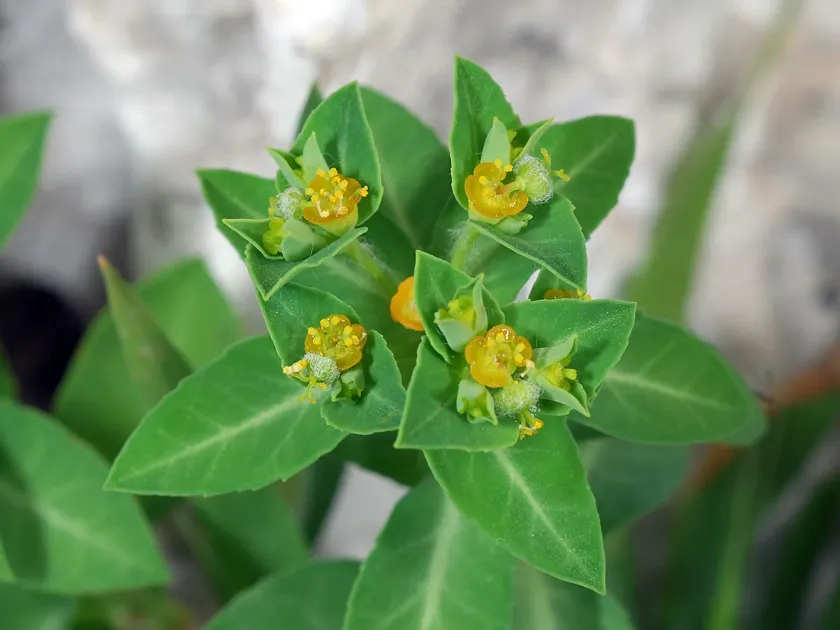
Description
Growing requirements
Beirut spurge (Euphorbia berythea) is a perennial herbaceous plant belonging to the Euphorbiaceae family. Native to the Eastern Mediterranean region, particularly Lebanon, this species has adapted to arid and rocky environments where survival depends on efficient water management.
The plant thrives in well-drained, sandy, or stony soil compositions. Its natural habitat dictates its strict requirements for excellent soil aeration, as root health is easily compromised by waterlogged conditions.
Cultivation should focus on simulating its native Mediterranean climate. It requires full sun exposure and is highly tolerant of heat, making it an excellent candidate for xeriscaping in suitable climatic zones.
Morphologically, the plant features succulent-like stems and narrow foliage, which reduce moisture loss. Like all members of the Euphorbia genus, it contains a milky white latex sap that is chemically defensive against herbivores.
In terms of usage, it is highly valued in ornamental horticulture for its resilience in difficult, dry sites. It is rarely grown as a commercial agricultural crop but serves as a stable plant for arid garden landscapes.
Main diseases and pests
Root rot is the primary threat to the Beirut spurge, usually caused by overwatering or poor drainage. Maintaining a dry root zone during the dormant season is essential for long-term survival.
Spider mites and aphids are the most common pests found on this species. They typically appear when the plant is stressed or in conditions with poor airflow, potentially damaging the foliage.
Exposure to the milky latex sap can cause dermatitis or severe eye irritation. All horticultural practices, such as pruning or transplanting, must be performed with gloves and eye protection.
Fungal diseases like powdery mildew may affect the plant during high humidity periods. Ensuring the plants are spaced appropriately helps mitigate this risk by promoting good ventilation.
Management strategies involve routine inspection of the leaf underside for signs of infestation and applying targeted systemic treatments only when pest populations exceed acceptable thresholds.