
Barrelier's Spurge
Euphorbia barrelieri
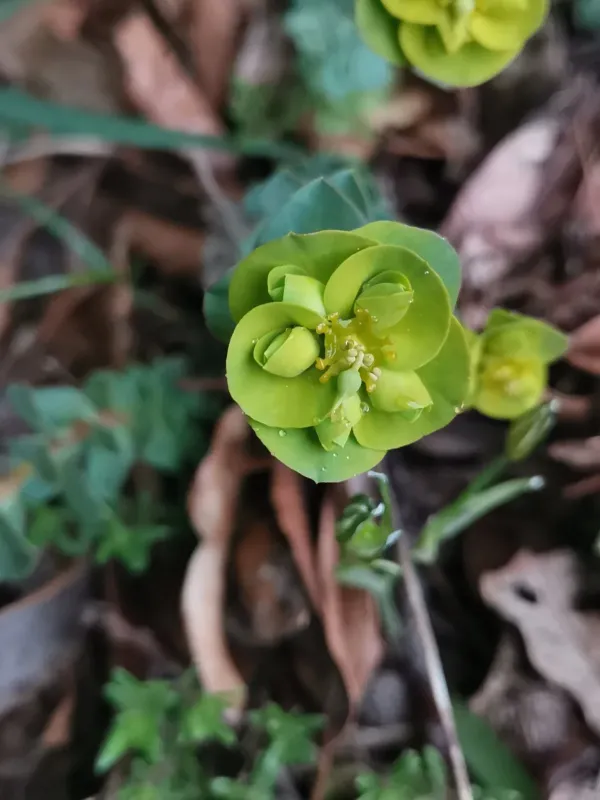
Description
Growing requirements
Barrelier's Spurge (Euphorbia barrelieri) is a perennial herbaceous plant belonging to the Euphorbiaceae family. Native to the Mediterranean region, it typically thrives in dry, rocky environments, showcasing its adaptability to arid conditions.
Botanically, the plant is recognized by its branched or simple stems and narrow leaves. Its root system is exceptionally efficient at extracting moisture from soil, allowing the plant to sustain growth even during harsh summer droughts typical of its native range.
Successful cultivation requires well-drained, lime-rich soils with a neutral to slightly alkaline pH. It is crucial to avoid areas with poor drainage, as the roots are highly susceptible to rot when kept in consistently damp or heavy clay conditions.
The plant requires full sun exposure to flourish and maintain its structural integrity. It is well-suited to climates with hot, dry summers and mild winters, which closely mimic its natural ecological niche in Southern Europe.
Economically, Barrelier's Spurge is primarily utilized in xeriscaping and rock gardens due to its low maintenance needs and drought tolerance. Gardeners must use gloves when handling the plant, as the milky sap can cause significant skin irritation.
Main diseases and pests
The primary threats to Euphorbia barrelieri are fungal pathogens resulting from overwatering or high atmospheric humidity. Root rot remains the most serious condition, often caused by Phytophthora species in waterlogged environments.
Powdery mildew represents a frequent foliage issue during humid, still weather. Providing good air circulation around the plants and avoiding overhead irrigation can significantly mitigate the risk of infection.
Insect pests, such as aphids and spider mites, are common nuisances that cluster on the succulent stems. These pests can weaken the plant's vascular system, potentially facilitating the entry of secondary viral infections.
Integrated Pest Management (IPM) is recommended, focusing on early detection through frequent scouting. Removing heavily infested stems and treating with appropriate horticultural oils can restore plant health effectively.
It is important to keep the cultivation area free of debris and invasive weeds, which can act as reservoirs for various pests and diseases. Maintaining a clean growing environment is key to ensuring the longevity of these spurge plantings.