
Spiny spurge
Euphorbia aculeata
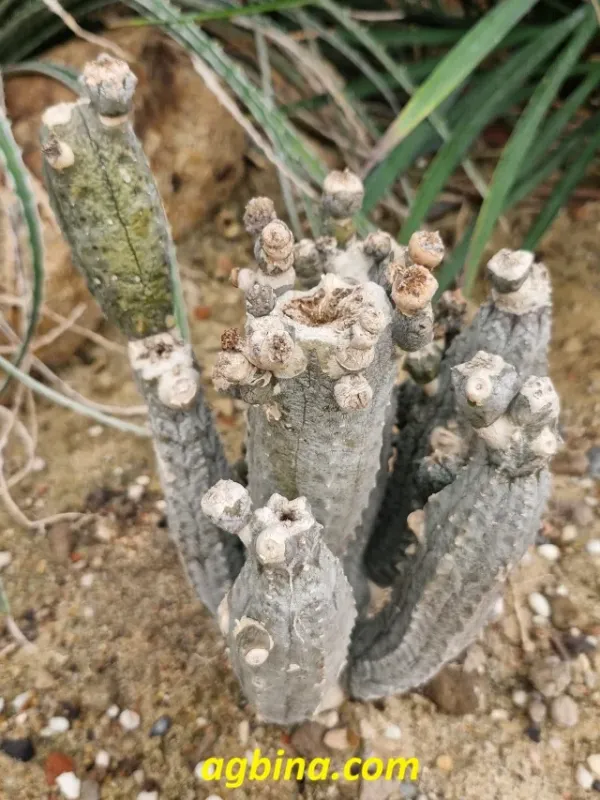
Description
Growing requirements
Spiny spurge (lat. Euphorbia aculeata) is a member of the diverse Euphorbiaceae family. It is a perennial succulent recognized for its specialized adaptation to arid environments.
Originating from the African regions, this plant is naturally found in rocky outcrops and dry terrains. Its evolutionary history has endowed it with high drought resistance, making it a unique botanical specimen.
Successful cultivation requires soil with excellent drainage capabilities. Growers typically use mineral-heavy substrates comprising coarse sand, grit, and minimal organic matter to prevent root suffocation.
Lighting is the most critical environmental factor for this species. It demands high-intensity solar radiation to maintain its structural integrity and encourage the production of its characteristic spines.
The agrotechnical management involves a cycle of active growth during warm seasons followed by a pronounced dormancy period where irrigation is significantly reduced to mimic natural cycles.
Main diseases and pests
The most significant threat to Euphorbia aculeata is stem and root rot caused by stagnant water in the root zone. This is usually a result of improper irrigation techniques.
Spider mites represent a major pest risk for this crop. They thrive in dry, stagnant air conditions and feed on the plant sap, leading to yellowing of the epidermis and general decline.
Mealybugs are also prevalent, often nesting in the protected areas between the spines. Once an infestation occurs, manual removal or specific contact insecticides are required for control.
Fungal infections, particularly Fusarium or Phytophthora, can cause rapid tissue decay. Maintaining good ventilation is essential to mitigate these biological risks during the growing season.
To protect the plant, growers should avoid mechanical damage to the stem, as any wound serves as a potential entry point for secondary bacterial and fungal pathogens.