
Woolly croton
Croton capitatus
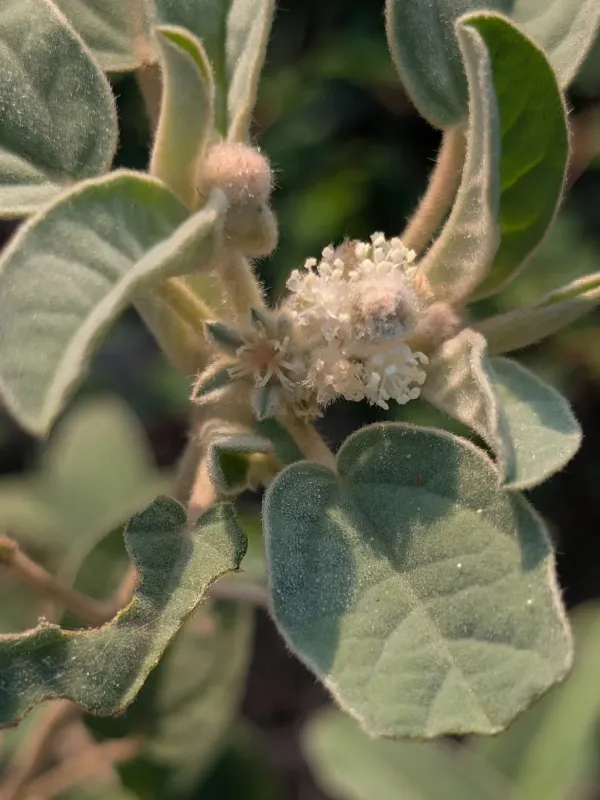
Description
Sowing dates
Woolly croton is an annual herbaceous plant that requires warm soil for successful germination. Sowing is typically performed in late spring once all risks of frost have passed and soil temperatures have stabilized.
Seeds should be sown at a shallow depth to ensure adequate moisture contact. The plant prefers full sun exposure, so selecting a site with unobstructed sunlight is crucial for achieving high germination rates and vigorous initial growth.
Row spacing should be maintained at roughly 30–40 centimeters to prevent overcrowding. Proper aeration is essential for the young plants to establish a healthy root system and minimize early-stage competition for soil nutrients.
Consistent moisture during the first two weeks post-sowing is necessary for optimal establishment. Once the seedlings reach a height of 5–10 centimeters, their drought tolerance increases significantly, allowing for less frequent irrigation.
Farmers are advised to monitor soil surface conditions to prevent crusting, which can hinder the emergence of delicate shoots. Light mechanical cultivation between rows can improve soil aeration and weed control.
Growing requirements
Croton capitatus belongs to the Euphorbiaceae family and is recognized for its preference for dry, well-drained habitats. It is highly adapted to sunny conditions and performs poorly in shaded environments.
The plant thrives in sandy or rocky soils where water drainage is excellent. While it is tolerant of low-fertility soils, balanced nitrogen and potassium availability can significantly enhance biomass production during the growth phase.
Climate-wise, the species is resilient to high heat and temporary dry spells. However, sustained productivity depends on the plant's ability to access deep moisture or supplemental irrigation in peak summer months.
Soil pH should ideally be neutral or slightly acidic. Highly alkaline conditions may lead to micronutrient deficiencies, which typically manifest as chlorosis on the leaves and stunted growth patterns.
The plant is known for its woolly trichomes, which help reduce transpiration rates. This anatomical feature is an evolutionary adaptation that allows the species to maintain metabolic functions even in arid climates.
Main diseases and pests
Woolly croton can be susceptible to various root rot pathogens if grown in waterlogged or poorly drained soils. Fungal infections, such as those caused by Phytophthora species, are the most frequent threat under high-humidity conditions.
Insect pests, including aphids and leaf-eating beetles, may cause economic damage during the early stages of vegetation. Monitoring for signs of infestation is essential to prevent rapid spread across the field.
Leaf spot diseases, characterized by localized necrotic lesions, can occur if foliage remains wet for extended periods due to poor air circulation. Proper row spacing is a primary defense against these threats.
Weed competition is a significant concern during the first month of development. Early intervention through mechanical weeding is more effective and environmentally friendly than relying on late-stage chemical applications.
Environmental stress, particularly sudden cold snaps or excessive rainfall during the flowering stage, can lead to physiological issues. Protecting the crop from extreme weather fluctuations is a key management priority.
Harvesting
The harvest period typically coincides with the peak flowering phase, which is when the capitula (head-like inflorescences) are fully developed. This timing ensures the concentration of plant secondary metabolites is at its peak.
Harvesting is usually done by mechanical mowing at a specific height to prevent the collection of soil debris. It is recommended to perform these operations early in the day to minimize damage to the plant tissue.
Post-harvest processing involves rapid drying to maintain the chemical integrity of the plant material. The raw material must be kept in cool, dark, and well-ventilated areas to prevent oxidative degradation.
Careful handling is required as the plant contains sap that can be irritating to the skin. Protective gloves and long-sleeved clothing are mandatory for staff handling the fresh material to prevent dermatitis.
Once dried to the appropriate moisture content, the crop should be stored in breathable containers. Quality control tests should evaluate both moisture levels and chemical composition before final distribution.