
Ephedra alata
Ephedra alata
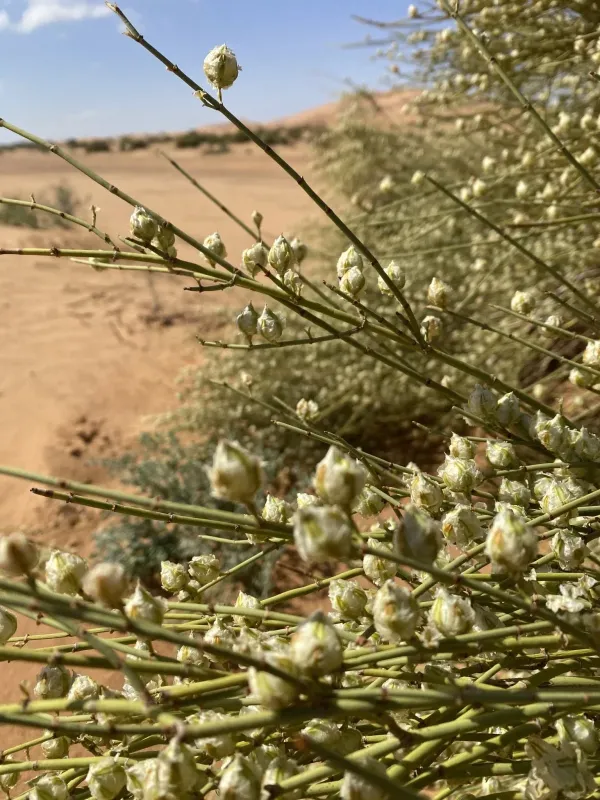
Description
Growing requirements
Ephedra alata is a woody perennial shrub belonging to the Ephedraceae family. Originating from the arid regions of North Africa and the Middle East, it is an extremophile plant adapted to survival in harsh, hyper-arid environments.
The crop thrives in well-drained, sandy, or rocky soils with low fertility levels. It is exceptionally resilient to drought and high soil salinity, making it suitable for land reclamation in desert areas where traditional crops would fail.
High solar irradiance is vital for the development of Ephedra alata. The plant requires a hot, dry climate with minimal rainfall to maintain its physiological balance and to optimize the accumulation of alkaloids in its green stems.
Botanically, the plant features jointed stems and highly reduced leaves that act as scales. This architecture minimizes water loss, allowing the plant to photosynthesize efficiently while protecting itself from intense heat and wind exposure.
Economically, the species is primarily harvested for its medicinal properties. The pharmacological industry utilizes the plant as a source of specific alkaloid compounds, necessitating precise harvesting protocols to ensure quality standards.
Main diseases and pests
The most significant threats to Ephedra alata are fungal diseases related to improper moisture management. High humidity levels combined with poor soil drainage can lead to rapid decay of the root collar and plant death.
While the plant is quite hardy, soil-borne pests can affect young seedlings during the establishment phase. Proper site preparation and the use of healthy, pathogen-free planting stock are essential for crop success.
Weed competition is generally low in the natural habitat, but invasive species can hinder the initial growth of plantations. Manual weeding is often the safest practice for maintaining the health of the young ephedra stands.
Preventative measures include maintaining a strict irrigation schedule that allows the soil to dry out between watering sessions. Avoiding heavy mulching or organic fertilizer application near the stems helps prevent moisture accumulation.
Regular monitoring for symptoms of wilt or stem discoloration is required. Early detection is critical, as the slow growth rate of Ephedra alata makes the recovery from substantial pest or disease damage very difficult.