
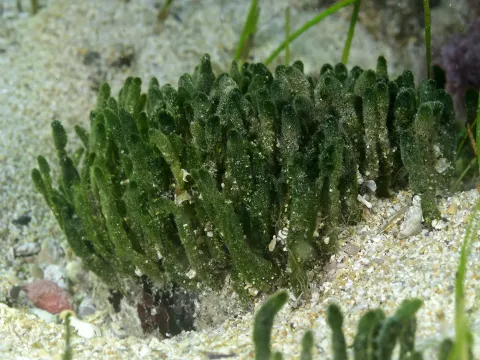
Dasycladus
Dasycladus
Dasycladus is a genus of marine green algae belonging to the family Dasycladaceae. Unlike traditional terrestrial crops, this organism is an aquatic plant typically found in shallow tropical and subtropical coastal waters.
What the section contains

Dasycladus
The botanical structure of Dasycladus is characterized by a siphonous thallus with a central axis surrounded by whorls of lateral branches. This complex morphology is highly adapted to the absorption of nutrients directly from the water column.
Environmental requirements for these algae include stable marine salinity and high water clarity. As photosynthetic organisms, they thrive in illuminated zones where solar radiation penetration is sufficient to support intensive metabolic activity.
Temperature plays a crucial role in the development cycle, with optimal growth occurring in stable warm water conditions. Extreme fluctuations in water temperature can lead to metabolic stress and damage the structural integrity of the algae.
While not a traditional agricultural crop, Dasycladus serves as a vital component of coastal ecosystems. Its presence is often used by marine biologists as a bioindicator for the ecological health of the benthos in protected marine areas.