
Tanais hornwort
Ceratophyllum tanaiticum
Description
Growing requirements
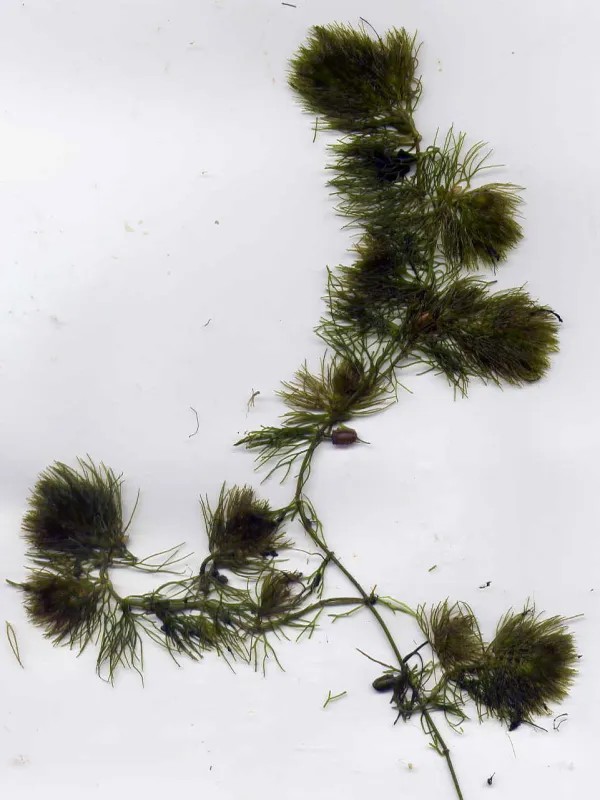
Tanais hornwort (Ceratophyllum tanaiticum) is a perennial submerged aquatic plant belonging to the Ceratophyllaceae family. A defining botanical feature is the complete absence of roots, as the plant absorbs nutrients directly from the water column through its stems and leaves.
The native range of the species is primarily associated with river basins in Eastern Europe. It thrives in stagnant or slow-moving freshwater bodies, where it forms dense, oxygenating underwater forests that support local aquatic biodiversity.
The plant requires high light intensity for effective photosynthesis, making clear water essential for its development. It flourishes in moderate temperatures, typically ranging between 18 and 26 degrees Celsius, during the active vegetative growth season.
Regarding cultivation, the species does not require soil substrate, making it ideal for hydroponic-like setups in aquaculture. It is highly sensitive to water chemistry, specifically requiring stable pH levels and a consistent supply of dissolved carbon dioxide.
The primary agricultural and environmental application of this plant is in phytoremediation. By efficiently absorbing excess nitrogen and phosphorus, it helps prevent harmful algal blooms and maintains water quality in commercial fish farming ponds.
Main diseases and pests
Major threats to this aquatic culture include the accumulation of heavy metals and pesticides from agricultural runoff. Furthermore, the proliferation of parasitic epiphytic algae can significantly restrict light availability, leading to stunted growth or the eventual decay of the hornwort population.