
Ageratum microcarpum
Ageratum microcarpum (Benth. ex Oerst.) Hemsl.
Description
Sowing dates
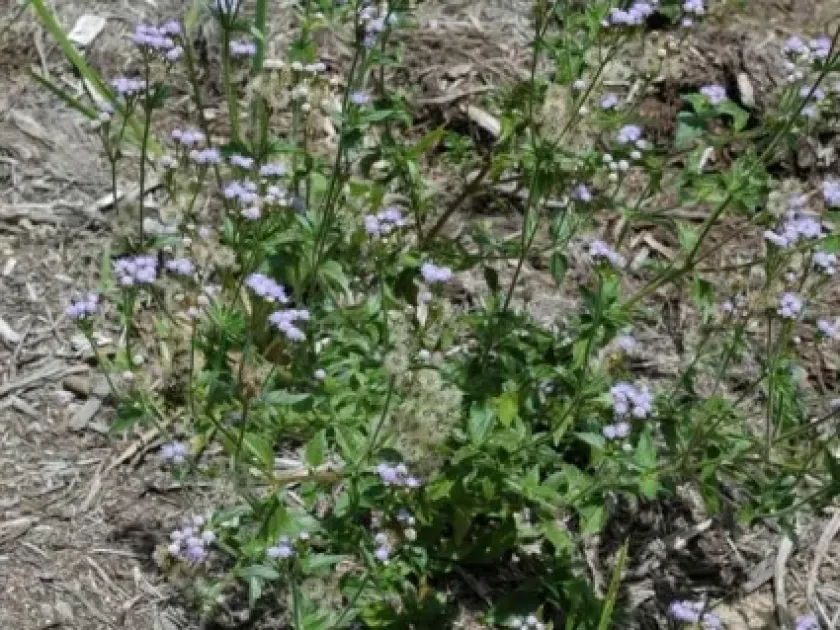
Ageratum microcarpum is a member of the Asteraceae family. This species is native to the regions of Central America, where it often grows as a perennial herb, while in colder climates, it is cultivated primarily as an annual ornamental plant.
The propagation of this crop is mainly achieved through seeds. Sowing is typically initiated in late winter or early spring in a controlled greenhouse environment to ensure that seedlings are ready for planting after the last frost.
The seeds of Ageratum microcarpum are minute and require surface sowing. They should be scattered evenly over a fine, moist potting mix and lightly pressed down without covering them, as they require light to germinate effectively.
Optimal germination occurs at temperatures between 20 and 22 degrees Celsius. Maintaining a consistent humidity level is crucial during this period, but excessive water must be avoided to prevent fungal issues such as "damping off" in young seedlings.
Once the seedlings develop their first true leaves, they are pricked out and moved into individual containers or plug trays. This process helps in establishing a strong root system before they are hardened off and transplanted to the outdoor garden.
Growing requirements
Ageratum microcarpum thrives best in full sun exposure. While it can tolerate partial shade, insufficient sunlight significantly reduces the plant's ability to bloom and leads to elongated, weak stems that lose their compact growth habit.
The plant prefers well-draining, fertile soil with a neutral to slightly acidic pH. It performs poorly in heavy, clay-based soils that retain too much water, as this leads to root suffocation and subsequent decay of the plant's vascular system.
Regular watering is essential, especially during the establishment phase and periods of extreme heat. However, the soil should be allowed to dry slightly between waterings, as the plant is sensitive to waterlogged conditions.
The species is highly sensitive to cold and frost. It prefers stable warm temperatures ranging from 18 to 25 degrees Celsius. Exposure to temperatures below 10 degrees Celsius can cause severe stress and stunt the plant's growth.
Maintenance, including light pruning or pinching back, is recommended to encourage lateral branching. This results in a bushier appearance and an increased number of inflorescences throughout the active growing season.
Main diseases and pests
Spider mites are common pests that target Ageratum microcarpum, particularly in hot and dry conditions. They suck sap from the underside of leaves, causing chlorosis and potentially leading to leaf drop if the infestation is severe.
Whiteflies are another significant threat in cultivation environments. They reproduce rapidly and can weaken the plant by feeding on its sap, which often leads to the growth of sooty mold on the honeydew secreted by the insects.
Fungal pathogens such as grey mold (Botrytis cinerea) can affect the plant when air circulation is poor and humidity levels remain consistently high. Proper spacing and ventilation are key to minimizing this risk in flower beds.
Root rot, often caused by Pythium or Phytophthora species, is prevalent in soils with poor drainage. Management involves improving soil structure and applying biological or chemical fungicides if early symptoms of wilting appear.
Viral infections can also occur, often transmitted by sap-sucking insects like aphids. Since there is no cure for viral diseases, the most effective management strategy is the prompt removal and destruction of infected plants.