
Ageratum houstonianum
Ageratum houstonianum Mill.
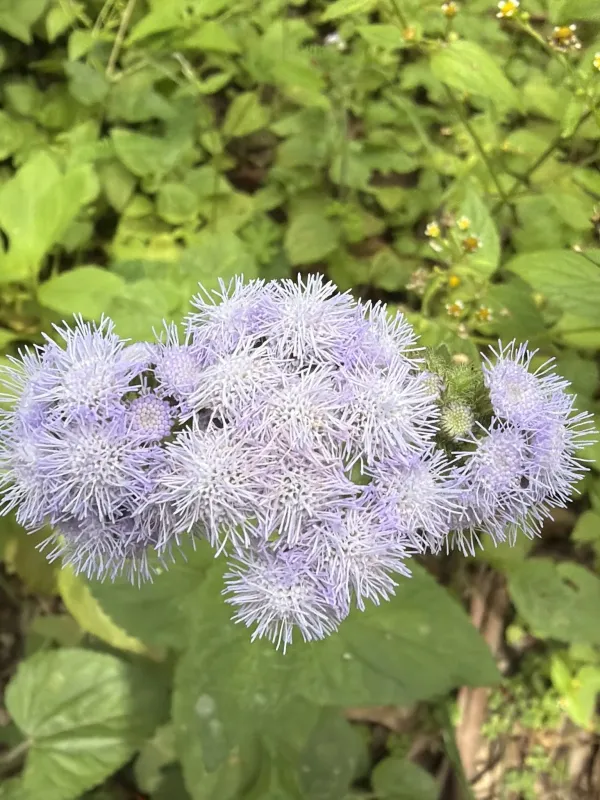
Description
Sowing dates
Seeds of Ageratum houstonianum are very small, so they should not be buried deep in the soil during sowing, but only lightly covered with sand or vermiculite.
To achieve early flowering, the crop is grown using the seedling method, with seeds sown in trays during March or early April.
Seedlings emerge within 10–14 days at a temperature of 20–22°C, after which the temperature should be lowered to prevent legginess.
Prepared seedlings are transplanted into the open ground only after the danger of late night frosts has completely passed.
Direct sowing into open ground is only possible in warmer southern regions, although this method leads to a significantly later blooming period.
Growing requirements
Ageratum houstonianum belongs to the Asteraceae family and is a heat-loving crop that requires sunny, open locations for optimal development.
The plant prefers light, neutral, and moderately fertile soils, as an excess of nitrogen leads to vigorous foliage growth at the expense of blooming.
The crop is highly drought-tolerant; however, regular watering is necessary during dry spells to ensure the formation of dense and lush flower clusters.
An essential aspect of agrotechnics is the regular deadheading of faded flowers, which stimulates the production of new buds and prolongs the season.
The plant does not tolerate waterlogged soil well, so drainage systems are required in areas with high groundwater levels.
Main diseases and pests
One of the main problems when growing Ageratum is root rot, which occurs due to moisture stagnation in the root zone.
The crop is susceptible to cucumber mosaic virus and bacterial wilt, which are frequently transmitted by insect pests.
Among pests, spider mites and whiteflies pose the greatest threat, especially under hot and dry summer conditions.
To control insect populations, it is recommended to conduct preventive spraying with systemic or contact insecticides.
Timely weeding and maintaining a consistent watering schedule are the best methods for preventing viral and fungal diseases.
Harvesting
The commercial use of Ageratum houstonianum is centered on landscape decoration, so harvest refers to the cutting of flower heads.
For floral arrangements, flower clusters should be cut at the stage of full expansion, when they possess maximum aesthetic value and shelf life.
In vases, Ageratum maintains its attractiveness for 7–10 days, provided the water is changed daily.
If harvesting your own seeds is required, keep the largest and earliest flower clusters on the plants until the seed pods turn brown and dry out.
Collected seeds must be thoroughly dried in the shade, cleaned of plant debris, and stored in paper bags in a cool, dark place.