
Acamptopappus sphaerocephalus
Acamptopappus sphaerocephalus
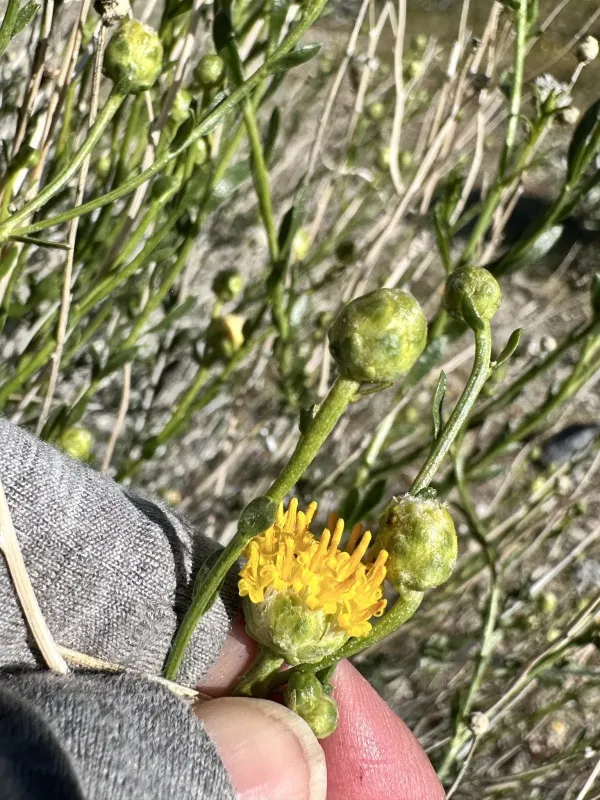
Description
Growing requirements
Acamptopappus sphaerocephalus, commonly known as Rayless Goldenhead, is a perennial shrub belonging to the Asteraceae family. It is native to the desert regions of the southwestern United States.
The plant is specifically adapted to the arid environments of the Mojave and Sonoran deserts, where it thrives in extreme heat and low precipitation zones.
It prefers well-drained, sandy, or gravelly soils. Its physiological structure allows it to maintain homeostasis despite high soil salinity and nutrient-poor ground conditions.
The plant exhibits a rounded, shrubby growth habit. Its leaves are narrow and often pubescent, an evolutionary strategy to reduce transpiration and prevent water loss.
While not a traditional food crop, it holds significant value in ecological restoration projects, specifically for stabilizing soil in harsh climates and enhancing local biodiversity.
Main diseases and pests
Wildfires pose the most significant threat to the survival of this species, exacerbated by the introduction of invasive grasses that dry out and fuel blazes.
Local insect populations, including various beetles, can cause damage to the foliage and affect the overall vitality of individual shrubs during the growing season.
Root rot is a potential risk if the plant is exposed to persistent soil moisture, which is generally absent in its natural desert habitat.
Environmental stress, including prolonged droughts beyond the species' tolerance threshold, can lead to the thinning of populations.
Human activities such as urban development and off-road vehicle use lead to the direct destruction of habitats and fragmentation of native colonies.